

Common · Knowledge
Adele ring
Commutative ring, whose elements (called adeles) are an infinite tuple of elements from each completion of a number field, such that a cofinite number of them lie in the ring of algebraic integers; "adele" is short for "additive ideal element"
In number theory, the adele ring is a construction that combines all local versions of a global field into one object. For the rational numbers, these local versions include the real numbers and the fields of p {\displaystyle p} -adic numbers for all prime numbers p {\displaystyle p} .
From Wikipedia
In number theory, the adele ring is a construction that combines all local versions of a global field into one object. For the rational numbers, these local versions include the real numbers and the fields of p {\displaystyle p} -adic numbers for all prime numbers p {\displaystyle p} . More generally, if K {\displaystyle K} is a global field, its adele ring, often denoted A K {\displaystyle \mathbb {A} _{K}} , is a topological ring built from the completions K v {\displaystyle K_{v}} of K {\displaystyle K} at all its places v {\displaystyle v} . Formally, it is a restricted product of the local fields K v {\displaystyle K_{v}} , with respect to the valuation rings at the non-archimedean places. Its elements are called adeles. The restricted product topology makes A K {\displaystyle \mathbb {A} _{K}} a locally compact topological ring. The field K {\displaystyle K} embeds diagonally in A K {\displaystyle \mathbb {A} _{K}} as a discrete subring, and the quotient A K / K {\displaystyle \mathbb {A} _{K}/K} is compact. As an additive locally compact abelian group, the adele ring is self-dual, making it a natural setting for Fourier analysis on global fields. The group of units of the adele ring, with its natural topology, is the idele group A K × {\displaystyle \mathbb {A} _{K}^{\times }} . The quotient A K × / K × {\displaystyle \mathbb {A} _{K}^{\times }/K^{\times }} , called the idele class group, is a central object in class field theory. Adeles and ideles are also used in Tate's thesis, the theory of automorphic forms, local-global principles, and adelic descriptions of divisors, line bundles, and principal bundles on algebraic curves.
Text: Wikipédia, CC BY-SA 4.0. ·
Related cards
-
O★★
One-form
Differential form of degree one; section of cotangent bundle
-
 ★★★
★★★
Menelaus's theorem
Theorem
-
 ★
★
Abel transform
Integral transform used in various branches of mathematics
-
M★
Multiply–accumulate operation
Or multiplier–accumulator, in digital signal processing
-
D★
Divisor (algebraic geometry)
Eneralization of codimension-1 subvarieties of algebraic varieties
-
E★
Elliott–Halberstam conjecture
On the distribution of prime numbers in arithmetic progressions
-
C★
Centralizer and normalizer
Subgroup of a group 𝐺 that each leaves invariant each element of a given subset of 𝐺 under conjugation
-
V★
Verbal arithmetic
A puzzle of reconstructing equations that have been enciphered into words
-
 ★
★
Bézout's theorem
Theorem calculating the number of intersection points of two algebraic curves in terms of their degrees
-
 ★
★
Extended real number line
Extension of the reals by +∞ and −∞
-
D★★★
Dual number
Algebra over a field
-
F★★
Fibonorial
Mathematical series, portmanteau of "Fibonacci" and "factorial"
-
A★
Abel's theorem
Theorem
-
 ★★★★★
★★★★★
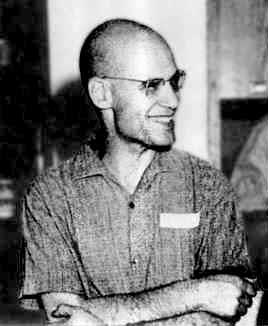
Alexander Grothendieck
French mathematician (1928–2014)
-
M★★
Mellin transform
Mathematical operation
-
C★★★
Continuum hypothesis
Hypothesis that no set has a cardinality between that of the integers and that of the real numbers
-
L★
Lattice multiplication
Multiplication algorithm
-
 ★
★
Free product
Operation that takes two groups G and H and constructs a new group G ∗ H