

Array programming
Programming paradigm that generalize operations on scalars to apply transparently to higher-dimensional arrays to facilitate parallelization
In computer science, array programming refers to solutions that allow the application of operations to an entire set of values at once. Such solutions are commonly used in scientific and engineering settings.
Nº Q4307787 ★
Common · Knowledge
Array programming
Programming paradigm that generalize operations on scalars to apply transparently to higher-dimensional arrays to facilitate parallelization
In computer science, array programming refers to solutions that allow the application of operations to an entire set of values at once. Such solutions are commonly used in scientific and engineering settings.
From Wikipedia
In computer science, array programming refers to solutions that allow the application of operations to an entire set of values at once. Such solutions are commonly used in scientific and engineering settings. Modern programming languages that support array programming (also known as vector or multidimensional languages) have been engineered specifically to generalize operations on scalars to apply transparently to vectors, matrices, and higher-dimensional arrays. These include APL, J, Fortran, MATLAB, Analytica, Octave, PL/I, R, Cilk Plus, Julia, Perl Data Language (PDL) and Raku. In these languages, an operation that operates on entire arrays can be called a vectorized operation, regardless of whether it is executed on a vector processor, which implements vector instructions. Array programming primitives concisely express broad ideas about data manipulation. The level of concision can be dramatic in certain cases: it is not uncommon to find array programming language one-liners that require several pages of object-oriented code.
Text: Wikipédia, CC BY-SA 4.0. ·
Related cards
-

Fortran
General-purpose programming language
Nº Q83303 ★★★
Not listed
-
M
Multiple dispatch
Feature of some programming languages
Nº Q1756543 ★
Not listed
-

Concurrency (computer science)
Ability of different parts or units of a program, algorithm, or problem to be executed out-of-order or in partial order, without affecting the final outcome
Nº Q1414548 ★★
Not listed
-

Graphviz
Graph visualization software
Nº Q260889 ★
Not listed
-
S
Software Localization
Adapting computer software to different languages, regional differences and technical requirements of a target locale
Nº Q1758815 ★★
Not listed
-
O
Operational calculus
Technique to solve differential equations
Nº Q1162633 ★
Not listed
-
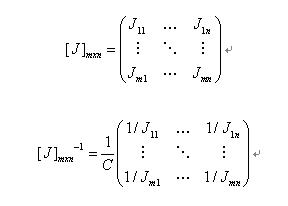
Matrix theory
Area of mathematics, part of linear algebra
Nº Q2256206 ★
Not listed
-

Globalization
Process of international integration arising from world views, products, ideas, and other aspects of culture
Nº Q7181 ★★★★
Not listed
-
C
Cross-platform software
Computer software implemented on multiple computing platforms
Nº Q56842894 ★★
Not listed
-

Integral test for convergence
Test for infinite series of monotonous terms for convergence
Nº Q1155313 ★
Not listed
-
W
Wikipedia:WikiProject Geographical coordinates
Group of Wikipedia editors
Nº Q10948883 ★★
Not listed
-

Orbital inclination change
Changing the inclination of an orbiting body's orbit
Nº Q1083626 ★
Not listed
-
F
Function overloading
In computer programming, creation of multiple function implementations with the same name
Nº Q1091461 ★
Not listed
-
S
Separation of duties
Nº Q1474665 ★
Not listed
-
C
Compositing
Combining of visual elements from separate sources into single images
Nº Q1121886 ★★
Not listed
-

Vibe coding
Software development practice with AI assistance
Nº Q133150082 ★★★★
Not listed
-

Business software
Software program used to perform various business functions
Nº Q1391080 ★★
Not listed
-
I
Information processing (psychology)
Process in which input information is analysed or transformed in order to produce information as output
Nº Q750843 ★
Not listed