

Bareiss algorithm
Algorithm for calculating determinants
In mathematics, the Bareiss algorithm, named after Erwin Bareiss, is an algorithm to calculate the determinant or the echelon form of a matrix with integer entries using only integer arithmetic; any divisions that are performed are guaranteed to be exact (there is no remainder). The method can also be used to compute the determinant of matrices with (approximated) real entries, avoiding the introduction of any round-off errors beyond those already present in the input.
Nº Q4860404 ★
Common · Knowledge
Bareiss algorithm
Algorithm for calculating determinants
In mathematics, the Bareiss algorithm, named after Erwin Bareiss, is an algorithm to calculate the determinant or the echelon form of a matrix with integer entries using only integer arithmetic; any divisions that are performed are guaranteed to be exact (there is no remainder). The method can also be used to compute the determinant of matrices with (approximated) real entries, avoiding the introduction of any round-off errors beyond those already present in the input.
From Wikipedia
In mathematics, the Bareiss algorithm, named after Erwin Bareiss, is an algorithm to calculate the determinant or the echelon form of a matrix with integer entries using only integer arithmetic; any divisions that are performed are guaranteed to be exact (there is no remainder). The method can also be used to compute the determinant of matrices with (approximated) real entries, avoiding the introduction of any round-off errors beyond those already present in the input.
Text: Wikipédia, CC BY-SA 4.0. ·
Related cards
-
D
De Casteljau's algorithm
Recursive method to evaluate polynomials in Bernstein form, used to work with Bézier curves
Nº Q1179419 ★
Not listed
-
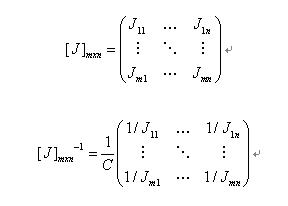
Matrix theory
Area of mathematics, part of linear algebra
Nº Q2256206 ★
Not listed
-
N
Nth root algorithm
Nº Q2835826 ★
Not listed
-
M
Monte Carlo algorithm
Randomized algorithm with some probability of producing the wrong result
Nº Q15238499 ★★
Not listed
-
D
Descartes method
Nº Q3333595 ★
Not listed
-
M
Master theorem (analysis of algorithms)
Method for analysis of algorithms
Nº Q922367 ★★
Not listed
-
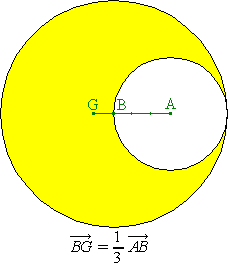
barycentre
Nº Q130384119 ★★★
Not listed
-
T
Tridiagonal matrix algorithm
Variant of Gaussian elimination for solving tridiagonal systems of equations
Nº Q1819156 ★★
Not listed
-

Numerical linear algebra
Subfield of numerical analysis and a type of linear algebra
Nº Q2004891 ★
Not listed
-

Gradient descent
Optimization algorithm
Nº Q1199743 ★★★
Not listed
-

Monte Carlo method
Broad class of computational algorithms using random sampling to obtain numerical results
Nº Q232207 ★★★★
Not listed
-
S
Shifting nth root algorithm
Algorithm
Nº Q338522 ★★★
Not listed
-

Rete algorithm
Efficient pattern matching algorithm for implementing production rule systems
Nº Q2002217 ★
Not listed
-
M
Matrix equivalence
Mathematical equivalence relation
Nº Q256151 ★
Not listed
-

Metropolis–Hastings algorithm
Algorithm
Nº Q910810 ★★
Not listed
-

Modular arithmetic
System of algebraic operations defined for remainders under division by a fixed positive integer; system of arithmetic for integers, where numbers "wrap around" upon reaching a certain value—the modulus
Nº Q319400 ★★★
Not listed
-
C
Classification and regression tree
Algorithm
Nº Q1022850 ★
Not listed
-
F
Fürer's algorithm
Integer multiplication algorithm for very large numbers
Nº Q2835790 ★
Not listed