


Binary Golay code
Error-correcting code used in digital communications
In mathematics and electronics engineering, a binary Golay code is a type of linear error-correcting code used in digital communications. The binary Golay code, along with the ternary Golay code, has deep connection to the theory of finite sporadic groups in mathematics.
Nº Q1534522 ★
Common · Knowledge
Binary Golay code
Error-correcting code used in digital communications
In mathematics and electronics engineering, a binary Golay code is a type of linear error-correcting code used in digital communications. The binary Golay code, along with the ternary Golay code, has deep connection to the theory of finite sporadic groups in mathematics.
From Wikipedia
In mathematics and electronics engineering, a binary Golay code is a type of linear error-correcting code used in digital communications. The binary Golay code, along with the ternary Golay code, has deep connection to the theory of finite sporadic groups in mathematics. These codes are named in honor of Marcel J. E. Golay whose 1949 paper introducing them has been called, by E. R. Berlekamp, the "best single published page" in coding theory. There are two closely related binary Golay codes. The extended binary Golay code, G24 (sometimes just called the "Golay code" in finite group theory) encodes 12 bits of data in a 24-bit word in such a way that any 3-bit errors can be corrected or any 7-bit errors can be detected. The other, the perfect binary Golay code, G23, has codewords of length 23 and is obtained from the extended binary Golay code by deleting one coordinate position (conversely, the extended binary Golay code is obtained from the perfect binary Golay code by adding a parity bit). In standard coding notation, the codes have parameters [24, 12, 8] and [23, 12, 7], corresponding to the length of the codewords, the dimension of the code, and the minimum Hamming distance between two codewords, respectively.
Text: Wikipédia, CC BY-SA 4.0. · Image: Life of Riley (Public domain) ·
Related cards
-

Viviani's theorem
Theorem that the sum of the shortest distances from any interior point to the sides of an equilateral triangle equals the length of the triangle's altitude
Nº Q852183 ★
Not listed
-

Pascal's triangle
Triangular array of the binomial coefficients in mathematics
Nº Q177051 ★★★★
Not listed
-

Peter Naur
Danish computer scientist (1928–2016) and Turing Award winner (2005); author of 'Programming as Theory Building' (1985); co-editor of the 1968 NATO Software Engineering Conference report
Nº Q92618 ★
Not listed
-
B
Bencode
Data serialization format
Nº Q871923 ★
Not listed
-
T
The Laws of Thought
Book by George Boole
Nº Q7746455 ★
Not listed
-

EDVAC
Second computer after ENIAC
Nº Q834849 ★★
Not listed
-
W
Weil conjectures
Theorem
Nº Q1479613 ★★
Not listed
-
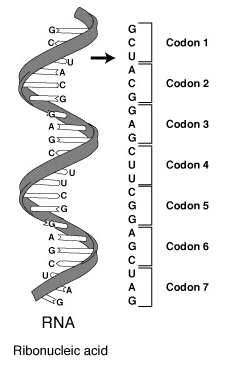
Codon
Sequence of nucleotide triplets
Nº Q165052 ★★
Not listed
-

HMAC
Computer communications hash algorithm
Nº Q1669397 ★★★
Not listed
-
E
Exponential backoff
Rate-seeking algorithm
Nº Q1417920 ★★
Not listed
-
C
Computational learning theory
Theory of machine learning
Nº Q2462783 ★
Not listed
-

Wolfgang Giloi
German computer scientist (1930–2009)
Nº Q2589697 ★
Not listed
-
B
Bibcode
Code used to identify references in certain astronomical data systems
Nº Q25754 ★★
Not listed
-

Universal Decimal Classification
Bibliographic and library classification system
Nº Q243350 ★★★
Not listed
-

Codex Alimentarius
Collection of internationally recognized standards, codes of practice, guidelines, and other recommendations relating to foods, food production, and food safety
Nº Q312100 ★★★
Not listed
-
S
Simon's problem
Problem involving an oracle, which quantum computers can solve exponentially faster than classical computers; an oracle separation of BQP and BPP
Nº Q5763587 ★
Not listed
-

Ruy de Queiroz
Brazilian Electrical engineer
Nº Q7383633 ★
Not listed
-
M
McEliece cryptosystem
Asymmetric encryption algorithm based on the NP-hard problem of decoding a general linear code
Nº Q1042583 ★
Not listed