

Speedcoding
Programming language
Speedcoding, Speedcode or SpeedCo was the first high-level programming language created for an IBM computer. The language was developed by John W. Backus in 1953 for the IBM 701 to support computation with floating point numbers.
Nº Q7475416 ★
Common · Knowledge
Speedcoding
Programming language
Speedcoding, Speedcode or SpeedCo was the first high-level programming language created for an IBM computer. The language was developed by John W. Backus in 1953 for the IBM 701 to support computation with floating point numbers.
From Wikipedia
Speedcoding, Speedcode or SpeedCo was the first high-level programming language created for an IBM computer. The language was developed by John W. Backus in 1953 for the IBM 701 to support computation with floating point numbers. The idea arose from the difficulty of programming the IBM SSEC machine when Backus was hired to calculate astronomical positions in early 1950. The speedcoding system was an interpreter and focused on ease of use at the expense of system resources. It provided pseudo-instructions for common mathematical functions: logarithms, exponentiation, and trigonometric operations. The resident software analyzed pseudo-instructions one by one and called the appropriate subroutine. Speedcoding was also the first implementation of decimal input/output operations. Although it substantially reduced the effort of writing many jobs, the running time of a program that was written with the help of Speedcoding was usually ten to twenty times that of machine code. The interpreter took 310 memory words, about 30% of the memory available on a 701.
Text: Wikipédia, CC BY-SA 4.0. ·
Related cards
-

1C:Enterprise programming language
Programming language
Nº Q65065977 ★★★
Not listed
-

History of Python
History of the Python programming language
Nº Q4205080 ★★★
Not listed
-
L
LLVM
Compiler backend for multiple programming languages
Nº Q223490 ★★★
Not listed
-
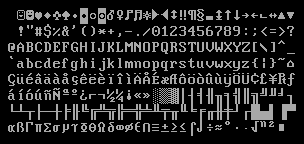
Code page 437
DOM OEM code page, from the character set of the original IBM PC
Nº Q1105757 ★★
Not listed
-

Nassi–Shneiderman diagram
Diagram used to visualize the structure of a computer program
Nº Q1251015 ★★★
Not listed
-

John Hopcroft
American computer scientist
Nº Q62874 ★
Not listed
-

Whitespace (programming language)
Esoteric programming language
Nº Q378222 ★★
Not listed
-

Gene Amdahl
American physicist (1922-2015)
Nº Q62890 ★
Not listed
-
L
LabVIEW
System-design platform and development environment
Nº Q746261 ★★
Not listed
-
P
PL/I
Procedural, imperative computer programming language
Nº Q223433 ★★★★
Not listed
-

Guido van Rossum
Dutch programmer and creator of Python
Nº Q30942 ★★★
Not listed
-
W
Wolfram Language
Programming language and environment
Nº Q15241057 ★
Not listed
-

ELIZA
Early natural language processing computer program
Nº Q580318 ★★★★
Not listed
-

Printer Command Language
Page description language
Nº Q845753 ★
Not listed
-

Haskell
Purely functional programming language
Nº Q34010 ★★★
Not listed
-

OpenCL
Open standard for programming heterogenous computing systems, such as CPUs or GPUs
Nº Q681360 ★★
Not listed
-

Bjarne Stroustrup
Danish computer scientist, creator of C++ (born 1950)
Nº Q92620 ★★★
Not listed
-

Lisp (programming language)
Functional programming language based on the lambda calculus
Nº Q132874 ★★★
Not listed