

Structured program theorem
Theorem that a class of control flow graphs can compute any computable function if it combines subprograms only through sequence, selection, and iteration
In programming language theory, the structured program theorem, generally called the Böhm–Jacopini theorem, states that a class of control-flow graphs (historically called flowcharts in this context) can compute any computable function using only the following three control structures to combine subprograms (statements and blocks): Sequence Executing one subprogram, and then another subprogram Selection Executing one of two subprograms according to the value of a boolean expression Iteration Repeatedly executing a subprogram as long as a boolea...
Nº Q2635326 ★★
Uncommon · Knowledge
Structured program theorem
Theorem that a class of control flow graphs can compute any computable function if it combines subprograms only through sequence, selection, and iteration
In programming language theory, the structured program theorem, generally called the Böhm–Jacopini theorem, states that a class of control-flow graphs (historically called flowcharts in this context) can compute any computable function using only the following three control structures to combine subprograms (statements and blocks): Sequence Executing one subprogram, and then another subprogram Selection Executing one of two subprograms according to the value of a boolean expression Iteration Repeatedly executing a subprogram as long as a boolea...
From Wikipedia
In programming language theory, the structured program theorem, generally called the Böhm–Jacopini theorem, states that a class of control-flow graphs (historically called flowcharts in this context) can compute any computable function using only the following three control structures to combine subprograms (statements and blocks): Sequence Executing one subprogram, and then another subprogram Selection Executing one of two subprograms according to the value of a boolean expression Iteration Repeatedly executing a subprogram as long as a boolean expression is true More precise definitions are listed in the next section. The structured chart subject to these constraints, particularly the loop constraint implying a single exit (as described later in this article), may however use additional variables in the form of bits (stored in an extra integer variable in the original proof) in order to keep track of information that the original program represents by the program location. The construction was based on Böhm's programming language P′′. The theorem forms the basis of structured programming, a programming paradigm which eschews the goto statement, exclusively using other control semantics for selection and iteration.
Text: Wikipédia, CC BY-SA 4.0. ·
Related cards
-
S
Superposition theorem
Theorem in electrical physics providing a relationship between voltages of branches of a bilateral linear circuit
Nº Q32028 ★
Not listed
-
L
Löwenheim–Skolem theorem
Theorem that, for any signature 𝜎, any infinite 𝜎-structure 𝑀 and any infinite cardinal 𝜅≥|𝜎|, there is a 𝜎‐structure 𝑁 of cardinality 𝜅 that is either an elementary substructure or an elementary extension of 𝑀
Nº Q1068283 ★
Not listed
-
C
Cut-elimination theorem
Theorem
Nº Q376166 ★
Not listed
-

Modular programming
Structured programming technique where a program is divided into modules with specific functions
Nº Q6453666 ★
Not listed
-
P
Projection (set theory)
An operation in set theory that maps elements in a set to elements from another set
Nº Q7249440 ★
Not listed
-
W
Wolfram Language
Programming language and environment
Nº Q15241057 ★
Not listed
-

Gödel's completeness theorem
Fundamental theorem in mathematical logic
Nº Q902052 ★★
Not listed
-
l
logical calculus
Nº Q8465354 ★
Not listed
-

Segment tree
Tree data structure used in computer science
Nº Q2377385 ★
Not listed
-
C
Conjunctive normal form
Concept in Boolean logic
Nº Q846564 ★★
Not listed
-
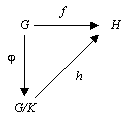
Fundamental theorem on homomorphisms
Theorem
Nº Q1187646 ★
Not listed
-
M
Monad (functional programming)
Design pattern in functional programming to build generic types
Nº Q1579914 ★★
Not listed
-
I
Identity theorem
Theorem that an analytic function is completely determined by its values on a countable subset that contains a converging sequence together with its limit
Nº Q1038716 ★
Not listed
-

Categorical logic
Branch of category theory within mathematics, adjacent to mathematical logic but more notable for its connections to theoretical computer science.
Nº Q5051813 ★
Not listed
-

Pascal's theorem
Theorem
Nº Q899002 ★★
Not listed
-

Iterated logarithm
Inverse function to a tower of powers
Nº Q2028293 ★
Not listed
-
F
Fundamental theorem of Galois theory
Theorem that describes the structure of certain types of field extensions
Nº Q766522 ★
Not listed
-
G
Gradient theorem
Theorem
Nº Q287347 ★
Not listed