

Común · Historia
Electrogastrogram
To measure electrical activity of the stomach or intestines
An electrogastrogram (EGG) is a computer generated graphic produced by electrogastrography, which detects, analyzes and records the myoelectrical signal generated by the movement of the smooth muscle of the stomach, intestines and other smooth muscle containing organs. An electrogastroenterogram or electroviscerogram (or gastroenterogram) is a similar display of the recording of myoelectrical activity of gastrointestinal or other organs which are able to generate myoelectrical activity.
En Wikipedia
Texto en inglés Aún no hay artículo en tu idioma: extracto en inglés.
An electrogastrogram (EGG) is a computer generated graphic produced by electrogastrography, which detects, analyzes and records the myoelectrical signal generated by the movement of the smooth muscle of the stomach, intestines and other smooth muscle containing organs. An electrogastroenterogram or electroviscerogram (or gastroenterogram) is a similar display of the recording of myoelectrical activity of gastrointestinal or other organs which are able to generate myoelectrical activity. These names are made of different parts: electro, because it is related to electrical activity, gastro, Greek for stomach, entero or viscero, Greek for intestines, gram, a Greek root meaning "to write". An electrogastrogram (EGG), electroviscerogram (EVG) or a gastroenterogram are similar in principle to an electrocardiogram (ECG) in that sensors on the skin detect electrical signals indicative of muscular activity within. Where the electrocardiogram detects muscular activity in various regions of the heart, the electrogastrogram or electroviscerogram detects the myoelectrical activity of the wave-like contractions of the stomach, intestines or other organs (peristalsis). Walter C. Alvarez discovered the EGG signal and pioneered early studies of electrogastrography in 1921–22.
Texto: Wikipedia en inglés, CC BY-SA 4.0. · Imagen: Dvorave (CC BY-SA 4.0) ·
Cartas cercanas
-
 ★
★
Electrical resistivity tomography
Geophysical technique for imaging sub-surface structures
-
 ★
★
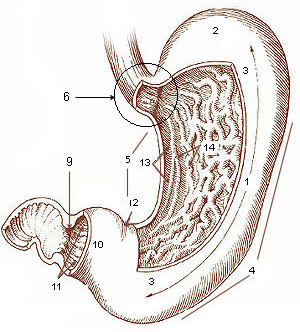
Rugae
Ridges produced by the folding of an organ
-
 ★★★★
★★★★
Miastenia grave
Enfermedad neuromuscular
-
 ★★
★★
Polisomnografía
Registro de ciertas funciones corporales durante el sueño
-
 ★★
★★
Endodermo
-
 ★
★
EPSG Geodetic Parameter Dataset
Public registry of spatial reference systems
-
 ★★
★★
P300
Potencial relacionado con eventos
-
E★★★
Eructo
Liberación de gas del tracto digestivo
-
 ★★
★★
reflujo biliar
Human disease
-
 ★★★
★★★
Peristalsis
Proceso por el cual se producen una serie de contracciones y relajaciones radialmente simétricas en sentido anterógrado a lo largo del tubo digestivo y los uréteres
-
 ★★★★
★★★★
Meteorismo
-
 ★
★
Onda U
-
E★★
Ethogram
Catalogue of behaviours exhibited by an animal
-
 ★
★
Ecografía endoscópica
-
 ★★★★
★★★★
Enfermedad por reflujo gastroesofágico
Enfermedad crónica del tracto gastrointestinal superior
-
 ★
★
Potencial relacionado con evento
Medición de una respuesta cerebral a un evento
-
 ★
★
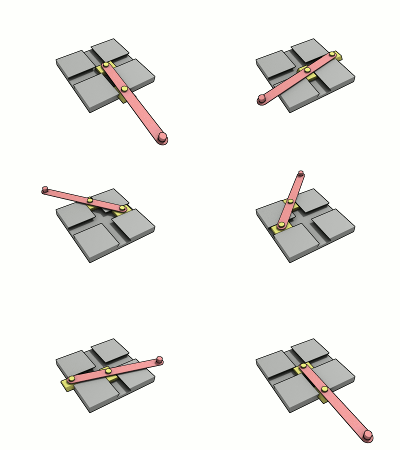
Elipsógrafo
Dispositivo mecánico que permite dibujar una elipse de forma continua
-
 ★★
★★
Esophageal inlet patch
Medical condition