
Anhua County
County
Anhua County (simplified Chinese: 安化县; traditional Chinese: 安化縣; pinyin: Ānhuà Xiàn) is a county in the Province of Hunan, China. It is under the administration of Yiyang Prefecture-level City.
Nº Q545479 ★★
Uncommon · Places
Anhua County
County
Anhua County (simplified Chinese: 安化县; traditional Chinese: 安化縣; pinyin: Ānhuà Xiàn) is a county in the Province of Hunan, China. It is under the administration of Yiyang Prefecture-level City.
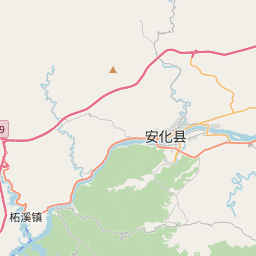
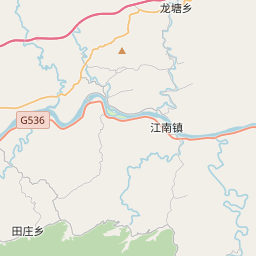
On the map
Last price
—
Floor price
—
7-day median
—
30-day sales
0
30-day range
—
In circulation
0
Price history
median
low – high
sales
No sales in this period
Show table
| Date | median | Low | High | sales |
|---|
Sales history
- Last sale
- —
- 30-day average
- —
- 30-day low
- —
- 30-day high
- —
- Sales 7d
- 0
- Sales 30d
- 0
No sales yet.
Anonymous sales: no buyer or seller shown. Figures count player-to-player sales only.
From Wikipedia
Anhua County (simplified Chinese: 安化县; traditional Chinese: 安化縣; pinyin: Ānhuà Xiàn) is a county in the Province of Hunan, China. It is under the administration of Yiyang Prefecture-level City. Located in the north-central part of the province, the county is bordered to the north by Dingcheng District of Changde City and Taoyuan County, to the east by Taojiang and Ningxiang Counties, to the south by Lianyuan City and Xinhua County, and to the west by Xupu and Yuanling Counties. Anhua County covers an area of 4,950 km2 (1,910 sq mi). As of 2013, it had a registered population of 1,029,000 and a permanent resident population of 912,100. Anhua has 18 towns and 5 townships under its jurisdiction, and the county seat is Dongping (东坪镇). Anhua County is the source place of Anhua dark tea, which is a kind of dark tea; Anhua was an important nodal point of the Tea Horse Road in ancient times. Anhua is both the southernmost and westernmost county-level division of Yiyang. Anhua and its neighborhood have a very distinct indigenous culture - Meishan culture, which has quite long history and profound religious content, influenced by mainstream Han-Chinese culture and also some neighbor cultures during its developing process.
Text: Wikipédia, CC BY-SA 4.0. · Image: MNXANL (CC BY-SA 4.0) ·


