
Aqua Appia
First ancient Roman aqueduct
The Aqua Appia was the first Roman aqueduct, and its construction was begun in 312 BC by the censor Appius Claudius Caecus, who also built the important Via Appia. By the end of the 1st century BC it had fallen out of use as an aqueduct, and was used as a sewer instead.
Nº Q278579 ★★
Uncommon · Places
Aqua Appia
First ancient Roman aqueduct
The Aqua Appia was the first Roman aqueduct, and its construction was begun in 312 BC by the censor Appius Claudius Caecus, who also built the important Via Appia. By the end of the 1st century BC it had fallen out of use as an aqueduct, and was used as a sewer instead.
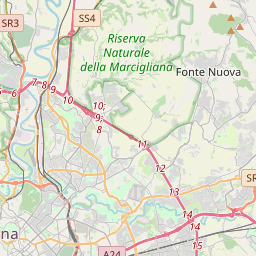
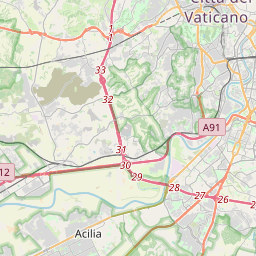
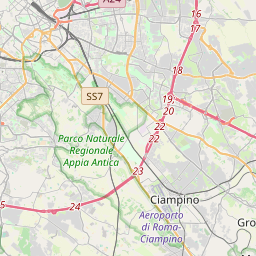
On the map

Last price
—
Floor price
—
7-day median
—
30-day sales
0
30-day range
—
In circulation
0
Price history
median
low – high
sales
No sales in this period
Show table
| Date | median | Low | High | sales |
|---|
Sales history
- Last sale
- —
- 30-day average
- —
- 30-day low
- —
- 30-day high
- —
- Sales 7d
- 0
- Sales 30d
- 0
No sales yet.
Anonymous sales: no buyer or seller shown. Figures count player-to-player sales only.
From Wikipedia
The Aqua Appia was the first Roman aqueduct, and its construction was begun in 312 BC by the censor Appius Claudius Caecus, who also built the important Via Appia. By the end of the 1st century BC it had fallen out of use as an aqueduct, and was used as a sewer instead. The springs feeding Aqua Appia were discovered by Appius' co-censor Gaius Plautius Venox, who received the cognomen Venox for the discovery. The aqueduct was named after Appius alone because Plautius resigned after serving 18-months as a censor while Appius deceitfully kept his position until the aqueduct was completed. It's not certain how much water Aqua Appia fed to the city of Rome, but in the city records it is mentioned to have 841 quinariae -- 34,901 m3 (9,220,000 US gal) per 24-hours. However, measurements taken in the 1st century AD resulted with pipes being in total of 1,825 quinariae -- 73,000 m3 (19,000,000 US gal) per 24 hours. The water was fed to twenty local reservoirs from which it was further distributed to various districts of Rome. In 2016, what is likely to be a 32 m (105 ft) section of the Aqua Appia was excavated 17–18 m (56–59 ft) beneath Piazza Celimontana. Parts of the excavated section were relocated for reconstruction elsewhere.
Text: Wikipédia, CC BY-SA 4.0. · Image: ? / Coldeel (Public domain) ·
Related cards

Parco degli Acquedotti
Park in Rome, Italy
Nº Q3895477 ★★★

Eifel Aqueduct
Aqueduct in the Eifel region of the Roman Empire
Nº Q751092 ★★★

Aqua Traiana
1st-century Roman aqueduct from Lake Bracciano to Rome
Nº Q622956 ★★

Aqua Claudia
Roman aqueduct
Nº Q622930 ★★★

Fontana dell'Acqua Paola
Public fountain on the Janiculum hill in Rome, Italy
Nº Q1435809 ★★★★

Piscina Mirabilis
Reservoir
Nº Q222410 ★★★