
Atacama Region
Administrative division of Chile
The Atacama Region (Spanish: Región de Atacama, pronounced [ataˈkama]) is one of Chile's 16 first order administrative divisions. It comprises three provinces: Chañaral, Copiapó and Huasco.
Nº Q2120 ★★★★
Super Rare · Places
Atacama Region
Administrative division of Chile
The Atacama Region (Spanish: Región de Atacama, pronounced [ataˈkama]) is one of Chile's 16 first order administrative divisions. It comprises three provinces: Chañaral, Copiapó and Huasco.
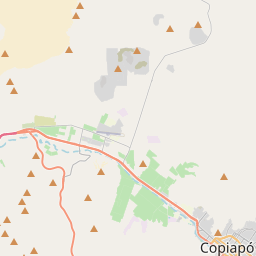
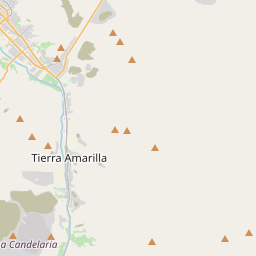
On the map
Last price
—
Floor price
—
7-day median
—
30-day sales
0
30-day range
—
In circulation
0
Price history
median
low – high
sales
No sales in this period
Show table
| Date | median | Low | High | sales |
|---|
Sales history
- Last sale
- —
- 30-day average
- —
- 30-day low
- —
- 30-day high
- —
- Sales 7d
- 0
- Sales 30d
- 0
No sales yet.
Anonymous sales: no buyer or seller shown. Figures count player-to-player sales only.
From Wikipedia
The Atacama Region (Spanish: Región de Atacama, pronounced [ataˈkama]) is one of Chile's 16 first order administrative divisions. It comprises three provinces: Chañaral, Copiapó and Huasco. It is bordered to the north by Antofagasta, to the south by Coquimbo, to the east by the provinces of Catamarca, La Rioja and San Juan of Argentina, and to the west by the Pacific Ocean. The regional capital Copiapó is located 806 km (501 mi) north of the country's capital of Santiago. The region occupies the southern portion of the Atacama Desert, the rest of the desert is mainly distributed among the other regions of Norte Grande. As a generalization south of Copiapó River the region is mostly semi-arid and north of it is a true desert. The inland area in the north also differs from the southern part by hosting active volcanoes part of the Central Volcanic Zone of Andes. The region has a long tradition of mining that features a silver rush from 1832 to 1850 and a strong development of iron mining from 1952 to 1966. Besides silver and iron the region also hosts valuable reserves of gold, copper and lithium. Agriculture in the region is mainly restricted to the valleys of Copiapó and Huasco where irrigation is aided by the dams of Lautaro and Santa Juana respectively. Crops cultivated include table grapes, olives, alfalfa and pisco grapes.
Text: Wikipédia, CC BY-SA 4.0. · Image: sergejf (CC BY-SA 2.0) ·
Related cards

Antofagasta Region
Administrative division in Chile
Nº Q2118 ★★★★

Tarapacá Region
Administrative division in Chile
Nº Q2114 ★★★★

Arica y Parinacota Region
Administrative division in Chile
Nº Q2109 ★★★★

Araucanía Region
Administrative division of Chile
Nº Q2176 ★★★★

Copiapó
City in northern Chile
Nº Q3868 ★★★★

Atacama Desert
Desert in South America
Nº Q47141 ★★★★★