
Bakken formation
Geological rock formation known for crude oil production
The Bakken Formation ( BAH-kən) is a rock unit from the Late Devonian to Early Mississippian age occupying about 200,000 square miles (520,000 km2) of the subsurface of the Williston Basin, underlying parts of Montana, North Dakota, Saskatchewan and Manitoba. The formation was initially described by geologist J. W. Nordquist in 1953.
Nº Q2119891 ★
Common · Places
Bakken formation
Geological rock formation known for crude oil production
The Bakken Formation ( BAH-kən) is a rock unit from the Late Devonian to Early Mississippian age occupying about 200,000 square miles (520,000 km2) of the subsurface of the Williston Basin, underlying parts of Montana, North Dakota, Saskatchewan and Manitoba. The formation was initially described by geologist J. W. Nordquist in 1953.
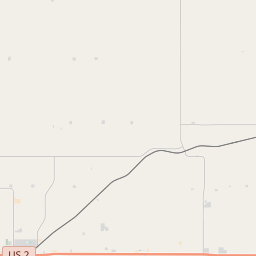
On the map

Last price
—
Floor price
—
7-day median
—
30-day sales
0
30-day range
—
In circulation
0
Price history
median
low – high
sales
No sales in this period
Show table
| Date | median | Low | High | sales |
|---|
Sales history
- Last sale
- —
- 30-day average
- —
- 30-day low
- —
- 30-day high
- —
- Sales 7d
- 0
- Sales 30d
- 0
No sales yet.
Anonymous sales: no buyer or seller shown. Figures count player-to-player sales only.
From Wikipedia
The Bakken Formation ( BAH-kən) is a rock unit from the Late Devonian to Early Mississippian age occupying about 200,000 square miles (520,000 km2) of the subsurface of the Williston Basin, underlying parts of Montana, North Dakota, Saskatchewan and Manitoba. The formation was initially described by geologist J. W. Nordquist in 1953. The formation is entirely in the subsurface, and has no surface outcrop. It is named after Henry O. Bakken (1901–1982), a farmer in Tioga, North Dakota, who owned the land where the formation was initially discovered during oil drilling. Besides the Bakken Formation being a widespread prolific source rock for oil when thermally mature, significant producible oil reserves exist within the rock unit itself. Oil was first discovered within the Bakken in 1951, but previous efforts to produce it faced technical difficulties that were cost prohibitive when cheaper energy sources were available elsewhere. In April 2008, a USGS report estimated the amount of recoverable oil using technology readily available at the end of 2007 within the Bakken Formation at 3.0 to 4.3 billion barrels (680,000,000 m3), with a mean of 3.65 billion. Simultaneously the state of North Dakota released a report with a lower estimate of 2.1 billion barrels (330,000,000 m3) of technically recoverable oil in the Bakken. Various other estimates place the total reserves, recoverable and non-recoverable with today's technology, at up to 24 billion barrels. A recent estimate places the figure at 18 billion barrels. In April 2013, the U.S. Geological Survey released a new figure for expected ultimate recovery of 7.4 billion barrels of oil. The application of hydraulic fracturing and directional drilling technologies has caused a boom in Bakken oil production since 2000. By the end of 2010, oil production rates had reached 458,000 barrels (72,800 m3) per day, thereby outstripping the pipeline capacity...
Text: Wikipédia, CC BY-SA 4.0. · Image: Joshua Doubek (CC BY-SA 3.0) ·
Related cards

Bazhenov Formation
Oil-bearing rock formation in Russia
Nº Q16535107 ★★

Dakota Access Pipeline
1,134-mile-long (1,825 km) underground oil pipeline project in the United States
Nº Q18619061 ★

Maastricht Formation
Rock formation
Nº Q3972112 ★★

Permian Basin (North America)
Sedimentary basin in the United States with large mineral and fossil fuel deposits
Nº Q2887576 ★★★

Mount Baker
Stratovolcano in Washington State, United States
Nº Q594387 ★★★

Mississippian (geology)
First subperiod of the Carboniferous Period
Nº Q744718 ★