
Bamyan Province
Province of Afghanistan
Bamyan (Pashto, Dari: بامیان), also spelled Bamiyan, Bāmīān or Bāmyān, is one of the 34 provinces of Afghanistan with the city of Bamyan as its center, and predominately inhabited by the Hazara people, located in central parts of Afghanistan. The terrain in Bamyan is mountainous or semi-mountainous, at the western end of the Hindu Kush mountains concurrent with the Himalayas.
Nº Q171382 ★★
Uncommon · Places
Bamyan Province
Province of Afghanistan
Bamyan (Pashto, Dari: بامیان), also spelled Bamiyan, Bāmīān or Bāmyān, is one of the 34 provinces of Afghanistan with the city of Bamyan as its center, and predominately inhabited by the Hazara people, located in central parts of Afghanistan. The terrain in Bamyan is mountainous or semi-mountainous, at the western end of the Hindu Kush mountains concurrent with the Himalayas.
On the map
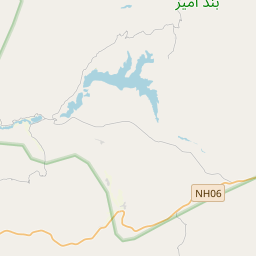
Last price
—
Floor price
—
7-day median
—
30-day sales
0
30-day range
—
In circulation
0
Price history
median
low – high
sales
No sales in this period
Show table
| Date | median | Low | High | sales |
|---|
Sales history
- Last sale
- —
- 30-day average
- —
- 30-day low
- —
- 30-day high
- —
- Sales 7d
- 0
- Sales 30d
- 0
No sales yet.
Anonymous sales: no buyer or seller shown. Figures count player-to-player sales only.
From Wikipedia
Bamyan (Pashto, Dari: بامیان), also spelled Bamiyan, Bāmīān or Bāmyān, is one of the 34 provinces of Afghanistan with the city of Bamyan as its center, and predominately inhabited by the Hazara people, located in central parts of Afghanistan. The terrain in Bamyan is mountainous or semi-mountainous, at the western end of the Hindu Kush mountains concurrent with the Himalayas. The province is divided into eight districts, with the town of Bamyan serving as its capital. The province has a population of about 495,557 and borders Samangan to the north, Baghlan, Parwan, and Maidan Wardak to the east, Ghazni and Daikundi to the south, and Ghor and Sar-e-Pol to the west. It is the largest province in the Central region of Afghanistan. It was a center of commerce and Buddhism in the 4th and 5th centuries. In antiquity, central Afghanistan was strategically placed to thrive from the Silk Road caravans that crisscrossed the region, trading between the Roman Empire, Han dynasty, Central Asia, and South Asia. Bamyan was a stopping-off point for many travelers. It was here that elements of Greek and Buddhist art were combined into a unique classical style known as Greco-Buddhist art. The province has several famous historical sites, including the now-destroyed Buddhas of Bamiyan, around which are more than 3,000 caves, the Band-e-Amir National Park, Dara-e-Ajhdar, Gholghola, and Zuhak ancient towns, the Feroz Bahar, Astopa, Klegan, Gaohargin, Kaferan, and Cheldukhtaran.
Text: Wikipédia, CC BY-SA 4.0. · Image: Terry Matlock (U.S. armed forces) (CC BY 2.0) ·
Related cards

Bamyan
The Cradle of Hazara Civilization
Nº Q214495 ★★★

Baghlan Province
Province of Afghanistan
Nº Q170309 ★★

Maidan Wardak Province
Province of Afghanistan
Nº Q183056 ★

Hazarajat
Region in the central highlands of Afghanistan
Nº Q6178796 ★★

Faryab Province
Province of Afghanistan
Nº Q173830 ★★★★

Kabul Province
Province of Afghanistan
Nº Q188933 ★