
Bisalta
Mountain in Italy
The Bisalta also known as Besimauda is a 2,231 metres (7,320 ft) mountain in the Ligurian Alps located at the convergence of the two short valleys of the Colla and Josina streams and the Pesio valley. It affects the municipalities of Peveragno and Boves in the Province of Cuneo.
Nº Q3250659 ★★
Uncommon · Places
Bisalta
Mountain in Italy
The Bisalta also known as Besimauda is a 2,231 metres (7,320 ft) mountain in the Ligurian Alps located at the convergence of the two short valleys of the Colla and Josina streams and the Pesio valley. It affects the municipalities of Peveragno and Boves in the Province of Cuneo.
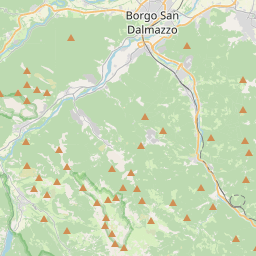
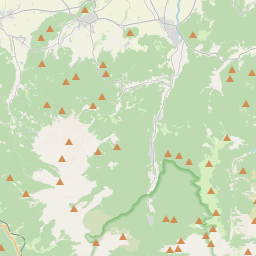
On the map
Last price
—
Floor price
—
7-day median
—
30-day sales
0
30-day range
—
In circulation
0
Price history
median
low – high
sales
No sales in this period
Show table
| Date | median | Low | High | sales |
|---|
Sales history
- Last sale
- —
- 30-day average
- —
- 30-day low
- —
- 30-day high
- —
- Sales 7d
- 0
- Sales 30d
- 0
No sales yet.
Anonymous sales: no buyer or seller shown. Figures count player-to-player sales only.
From Wikipedia
The Bisalta also known as Besimauda is a 2,231 metres (7,320 ft) mountain in the Ligurian Alps located at the convergence of the two short valleys of the Colla and Josina streams and the Pesio valley. It affects the municipalities of Peveragno and Boves in the Province of Cuneo. It has two peaks (the main one 2,231 meters above sea level, the subpeak 2,018 meters above sea level), from which it derives its name ("bis alta", "twice high"). The main peak and the subpeak have a summit cross. Due to its location, the Bisalta is an exceptional panoramic point, allowing to see even the Ligurian Sea on particularly clear days. Sometimes Bisalta is instead understood to mean the entire mountain range that includes, in addition to the main mountain, Bric Costa Rossa (2,403 m) and the ridge reliefs that connect the two mountains. In the 19th century, the Bisalta was climbed by mountaineers such as Douglas Freshfield and W. A. B. Coolidge. During the Second World War, it became a base for Italian partisan groups (Boves massacre). In the 1950s Felice Ippolito carried out prospections in the search of uranium, and in July 1960 a lightning killed four people when it hit the summit cross during a religious ceremony.
Text: Wikipédia, CC BY-SA 4.0. · Image: Nem80 (CC BY-SA 3.0) ·
Related cards

Monte Bisbino
Mountain of Lombardia
Nº Q3861242 ★★

Corno Bussola
Mountain in Italy
Nº Q3693758 ★★

Monte Bue
Mountain in Italy
Nº Q3861262 ★★

Monte Beigua
Mountain in Liguria, Italy
Nº Q1299731 ★★★

Kanin Mountains
Mountain range on the border of Italy and Slovenia
Nº Q3663438 ★★

Bisaurin
Mountain in Spain
Nº Q2904601 ★★★