
Bossons Glacier
Glacier in France
The Bossons Glacier is one of the larger glaciers of the Mont Blanc massif of the Alps, found in the Chamonix valley of Haute-Savoie département, south-eastern France. It is fed from icefields lying on the northern side of Mont Blanc, and descends close to the Aiguille du Midi and ends on the southern side of the Arve valley, close to the town of Chamonix.
Nº Q549647 ★★★★
Super Rare · Places
Bossons Glacier
Glacier in France
The Bossons Glacier is one of the larger glaciers of the Mont Blanc massif of the Alps, found in the Chamonix valley of Haute-Savoie département, south-eastern France. It is fed from icefields lying on the northern side of Mont Blanc, and descends close to the Aiguille du Midi and ends on the southern side of the Arve valley, close to the town of Chamonix.
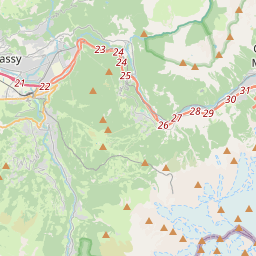
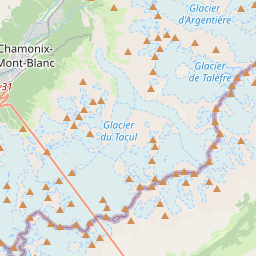
On the map
Last price
—
Floor price
—
7-day median
—
30-day sales
0
30-day range
—
In circulation
0
Price history
median
low – high
sales
No sales in this period
Show table
| Date | median | Low | High | sales |
|---|
Sales history
- Last sale
- —
- 30-day average
- —
- 30-day low
- —
- 30-day high
- —
- Sales 7d
- 0
- Sales 30d
- 0
No sales yet.
Anonymous sales: no buyer or seller shown. Figures count player-to-player sales only.
From Wikipedia
The Bossons Glacier is one of the larger glaciers of the Mont Blanc massif of the Alps, found in the Chamonix valley of Haute-Savoie département, south-eastern France. It is fed from icefields lying on the northern side of Mont Blanc, and descends close to the Aiguille du Midi and ends on the southern side of the Arve valley, close to the town of Chamonix. It has the largest altitudinal drop of all the alpine glaciers in Europe, and formerly extended much further down the valley than it does today. It is now approximately 7.5 km long, with a surface area of approximately 10 km2. In the 17th century the Bossons glacier extended right down into Chamonix, reaching the settlement of Le Fouly, engulfing farmland, barns and houses. Local bishops were called upon to exorcise the demons within the glacier. In 1777 the traveller and correspondent, William Coxe, observed in his letters that "we mounted by the side of the glacier of Bosson, to les Murailles de Glace, so called from their resemblance to walls: they form the large ranges of ice of prodigious thickness and solidity, rising abruptly and parallel to each other. Some of these ranges appeared about a hundred feet high. Near them were pyramids and cone of ice of all forms and sizes, shooting to a very considerable height, in the most beautiful and fantastic shapes." He then noted that, on his return in 1785, "these murailles de glace no longer existed". By around 1784 the glacier had started to retreat, although there was a renewed surge around 1815 and the frightened community erected a cross in front of its snout, which served as a marker for glacial retreat for the next 100 years. In 1900 the snout of the glacier was still reaching down into the...
Text: Wikipédia, CC BY-SA 4.0. · Image: Daniel*D (CC BY-SA 3.0) ·
Related cards

Mont Blanc massif
Mountain range in the Alps
Nº Q671343 ★★★★

Mer de Glace
Glacier in France
Nº Q583591 ★★★★

Aletsch Glacier
Glacier in Switzerland
Nº Q204658 ★★★★

Calderone glacier
Glacier in Italy
Nº Q1026461 ★★★★

French Alps
Part of the Alps mountain range in France
Nº Q1630884 ★★★

Chablais Alps
Mountain range of the western Alps
Nº Q2732722 ★★★