

Common · Nature
Breviatea
Clade of protists
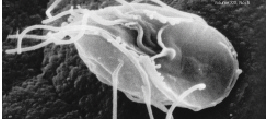
Breviatea, commonly known as breviate amoebae, are a group of free-living, amitochondriate protists with uncertain phylogenetic position. They are biflagellate, and can live in anaerobic (oxygen-free) environments. They are currently placed in the Obazoa clade.
From Wikipedia
Breviatea, commonly known as breviate amoebae, are a group of free-living, amitochondriate protists with uncertain phylogenetic position. They are biflagellate, and can live in anaerobic (oxygen-free) environments. They are currently placed in the Obazoa clade. They likely do not possess vinculin proteins. Their metabolism relies on fermentative production of ATP as an adaptation to their low-oxygen environment. The lineage emerged roughly one billion years ago, at a time when the oxygen content of the Earth's oceans was low, and they thus developed anaerobic lifestyles. Together with apusomonads, they are the closest relatives of the opisthokonts, a group that includes animals and fungi.
Text: Wikipédia, CC BY-SA 4.0. · Image: Karla Iveth Aguilera-Campos, Julie Boisard, Viktor Törnblom,... (CC BY 4.0) ·
Related cards
-
 ★★★★
★★★★
Amoeba
Cell or unicellular organism that uses pseudopodia for locomotion and feeding
-
 ★
★
Metamonad
Phylum of excavate protists
-
 ★★★★
★★★★
Amoeba (genus)
Genus of Protozoa
-
 ★★
★★
Dinophyceae
Class of protists
-
 ★★
★★
Podiata
Proposed clade containing the Amorphea and the organisms now assigned to the clade CRuMs
-
 ★
★
Discoba
Clade of eukaryotes