


Budding
Form of cellular asexual reproduction
Budding or blastogenesis is a type of asexual reproduction in which a new organism develops from an outgrowth or bud due to cell division at one particular site. For example, the small bulb-like projection coming out from the yeast cell is known as a bud.
Nº Q845312 ★★
Uncommon · Knowledge
Budding
Form of cellular asexual reproduction
Budding or blastogenesis is a type of asexual reproduction in which a new organism develops from an outgrowth or bud due to cell division at one particular site. For example, the small bulb-like projection coming out from the yeast cell is known as a bud.
From Wikipedia
Budding or blastogenesis is a type of asexual reproduction in which a new organism develops from an outgrowth or bud due to cell division at one particular site. For example, the small bulb-like projection coming out from the yeast cell is known as a bud. Since the reproduction is asexual, the newly created organism is a clone and, excepting mutations, is genetically identical to the parent organism. Organisms such as hydra use regenerative cells for reproduction in the process of budding. In hydra, a bud develops as an outgrowth due to repeated cell division of the parent body at one specific site. These buds develop into tiny individuals and, when fully mature, detach from the parent body and become new independent individuals. Internal budding or endodyogeny is a process of asexual reproduction, favored by parasites such as Toxoplasma gondii. It involves an unusual process in which two daughter cells are produced inside a mother cell, which is then consumed by the offspring prior to their separation. Endopolygeny is the division into several organisms at once by internal budding.
Text: Wikipédia, CC BY-SA 4.0. · Image: Masur (Public domain) ·
Related cards
-

Spore
Unit of asexual reproduction that may be adapted for dispersal and for survival, often for extended periods of time, in unfavorable conditions; spores form part of the life cycles of many plants, algae, fungi and protozoa
Nº Q177332 ★★★
Not listed
-

Germination
Process by which an organism grows from a seed
Nº Q193838 ★★★
Not listed
-

Oviparity
Reproduction via the laying of eggs
Nº Q212306 ★★★
Not listed
-
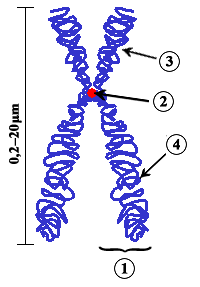
Homozygote
Cell in which identical alleles of the same gene are present on both homologous chromosomes
Nº Q49985 ★★
Not listed
-

oocyst
Zygote-containing cysts of sporozoan protozoa
Nº Q143715 ★
Not listed
-

Cloning
Process of producing individual organisms with identical genomes
Nº Q120877 ★★★
Not listed