
Burnie
Port city in Tasmania, Australia
Burnie ( BER-nee; pirinilaplu/palawa kani: Pataway) is a port city on the north-west coast of Tasmania, Australia. It is the fourth largest city on the island, located approximately 325 kilometres (202 mi) north-west of the state capital of Hobart, 147 kilometres (91 mi) north-west of Launceston, and 47 kilometres (29 mi) west of Devonport.
Nº Q175262 ★
Common · Places
Burnie
Port city in Tasmania, Australia
Burnie ( BER-nee; pirinilaplu/palawa kani: Pataway) is a port city on the north-west coast of Tasmania, Australia. It is the fourth largest city on the island, located approximately 325 kilometres (202 mi) north-west of the state capital of Hobart, 147 kilometres (91 mi) north-west of Launceston, and 47 kilometres (29 mi) west of Devonport.
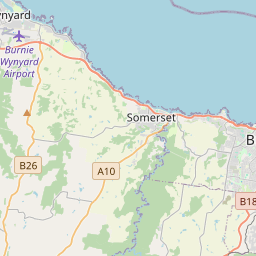
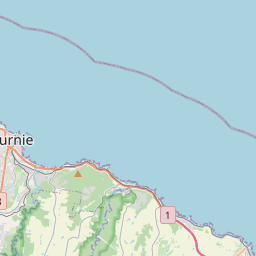
On the map
Last price
—
Floor price
—
7-day median
—
30-day sales
0
30-day range
—
In circulation
0
Price history
median
low – high
sales
No sales in this period
Show table
| Date | median | Low | High | sales |
|---|
Sales history
- Last sale
- —
- 30-day average
- —
- 30-day low
- —
- 30-day high
- —
- Sales 7d
- 0
- Sales 30d
- 0
No sales yet.
Anonymous sales: no buyer or seller shown. Figures count player-to-player sales only.
From Wikipedia
Burnie ( BER-nee; pirinilaplu/palawa kani: Pataway) is a port city on the north-west coast of Tasmania, Australia. It is the fourth largest city on the island, located approximately 325 kilometres (202 mi) north-west of the state capital of Hobart, 147 kilometres (91 mi) north-west of Launceston, and 47 kilometres (29 mi) west of Devonport. Founded in 1827 as Emu Bay, the township was renamed in the early 1840s after William Burnie, a director of the Van Diemen's Land Company, and proclaimed a city by Queen Elizabeth II on 26 April 1988. As of the 2021 census, Burnie has a population of 19,918, with a municipality area of 600 square kilometres (230 sq mi), administered by the City of Burnie. Burnie’s economy has historically been driven by heavy manufacturing, mining, forestry, and farming. The city is located on the Emu Bay coastline, with its fortunes closely tied to its deep water port. The Port of Burnie handles over 5,000,000 tonnes (4,900,000 long tons; 5,500,000 short tons) of freight annually, including nearly half of Tasmania’s containerised freight, and is the state’s primary gateway for mineral and forestry exports. The Burnie Chip Export Terminal, often referred to as the "Pyramids of Burnie", surpassed 1,500,000 tonnes (1,500,000 long tons; 1,700,000 short tons) of annual woodchip exports in 2017. Industrial decline in the late 20th century, culminating in the 2010 closure of the Associated Pulp and Paper Mills paper mill, which had been one of Burnie’s largest employers, brought economic and social challenges to the city. In the 21st century, Burnie has pursued diversification, with growth in education, healthcare, and logistics, alongside proposals in renewable energy and advanced manufacturing that align with Tasmania’s aspiration to achieve 200% renewable electricity generation by 2040.
Text: Wikipédia, CC BY-SA 4.0. · Image: Gary Houston (CC0) ·
Related cards

Devonport, Tasmania
City in Tasmania, Australia
Nº Q705705 ★

Hobart
Capital city of Tasmania, Australia
Nº Q40191 ★★★

Bunbury, Western Australia
City and metropolitan area in Western Australia
Nº Q256711 ★★

Launceston, Tasmania
City in the north of Tasmania, Australia
Nº Q339527 ★★★

Bundaberg
City in Queensland, Australia
Nº Q185404 ★★

Burnaby
City in British Columbia, Canada
Nº Q244025 ★★★