

Common · Places
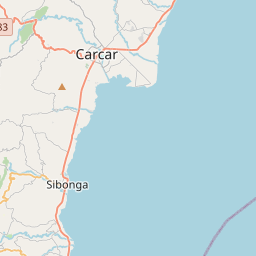
Carcar
City of the Philippines in the province of Cebu
Carcar, officially the City of Carcar (Cebuano: Dakbayan sa Carcar; Filipino: Lungsod ng Carcar), is a component city in the province of Cebu, Philippines. According to the 2024 census, it has a population of 140,308 people.
Read more
Before Spanish colonization, Carcar was known as "Kabkad" and it was part of area called "Sialo" which was ruled by the Sri Lumay (Rajahmura Lumaya), who had established his kingdom in Cebu Island and ruled from the Singhapala (present-day Mabolo in the north part of Cebu City). Sri Lumay had 4 sons, namely Alho, Ukob, Parang the Limp, and Bantug (father of Rajah Humabon). Sri Alho ruled a land south of Cebu, which was known as Sialo, which included Singhapala to Carcar-Valladolid (on the central east coast of Cebu Island) and beyond up to Santander (southern end of Cebu Island, 200 km from Mabolo). It became a town in 1599. Carcar is considered one of the oldest towns in Cebu, with its Spanish influence lasting for more than 300 years. In early April 1944, fishermen Pedro Gantuangko and Rufo Wamar, both residents of Carcar, discovered a wooden box floating off the coast of San Fernando, Cebu after they were alerted to the crash of a Japanese plane at sea. Upon retrieving the box from the shore, they discovered a water-soaked portfolio containing various Japanese-language documents, which they dried for the next two days and kept hidden from Japanese authorities. Gantuangko eventually handed over the documents to local guerrillas, with the papers soon reaching Lt. Col. James M. Cushing.
On the map
Text: Wikipédia, CC BY-SA 4.0. · Image: dbgg1979 (CC BY 2.0) ·