


Chebyshev function
Mathematical function
In mathematics, the Chebyshev function is either a scalarising function (Tchebycheff function) or one of two related functions. The first Chebyshev function ϑ(x) or θ(x) is given by ϑ ( x ) = ∑ p ≤ x log p {\displaystyle \vartheta (x)=\sum _{p\leq x}\log p} where log {\displaystyle \log } denotes the natural logarithm, with the sum extending over all prime numbers p that are less than or equal to x.
Nº Q1046711 ★
Common · Knowledge
Chebyshev function
Mathematical function
In mathematics, the Chebyshev function is either a scalarising function (Tchebycheff function) or one of two related functions. The first Chebyshev function ϑ(x) or θ(x) is given by ϑ ( x ) = ∑ p ≤ x log p {\displaystyle \vartheta (x)=\sum _{p\leq x}\log p} where log {\displaystyle \log } denotes the natural logarithm, with the sum extending over all prime numbers p that are less than or equal to x.
From Wikipedia
In mathematics, the Chebyshev function is either a scalarising function (Tchebycheff function) or one of two related functions. The first Chebyshev function ϑ(x) or θ(x) is given by ϑ ( x ) = ∑ p ≤ x log p {\displaystyle \vartheta (x)=\sum _{p\leq x}\log p} where log {\displaystyle \log } denotes the natural logarithm, with the sum extending over all prime numbers p that are less than or equal to x. The second Chebyshev function ψ(x) is defined similarly, with the sum extending over all prime powers not exceeding x ψ ( x ) = ∑ k ∈ N ∑ p k ≤ x log p = ∑ n ≤ x Λ ( n ) = ∑ p ≤ x ⌊ log p x ⌋ log p , {\displaystyle \psi (x)=\sum _{k\in \mathbb {N} }\sum _{p^{k}\leq x}\log p=\sum _{n\leq x}\Lambda (n)=\sum _{p\leq x}\left\lfloor \log _{p}x\right\rfloor \log p,} where Λ is the von Mangoldt function. The Chebyshev functions, especially the second one ψ(x), are often used in proofs related to prime numbers, because it is typically simpler to work with them than with the prime-counting function, π(x) (see the exact formula below.) Both Chebyshev functions are asymptotic to x, a statement equivalent to the prime number theorem. Tchebycheff function, Chebyshev utility function, or weighted Tchebycheff scalarizing function is used when one has several functions to be minimized and one wants to "scalarize" them to a single function: f T c h b ( x , w ) = max i w i f i ( x ) . {\displaystyle f_{Tchb}(x,w)=\max _{i}w_{i}f_{i}(x).} By minimizing this function for different values of w {\displaystyle w} , one obtains every point on a Pareto front, even in the nonconvex parts. Often the functions to be minimized are not f i {\displaystyle...
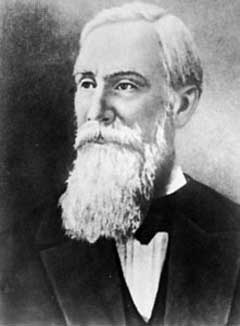
Text: Wikipédia, CC BY-SA 4.0. · Image: Dantheox (talk) (Uploads) (Public domain) ·
Related cards
-

Chebyshev polynomials
Two sequences of polynomials
Nº Q619511 ★★★
Not listed
-
Chebyshev's sum inequality
Inequality relating two increasing sequences of numbers, or one decreasing and another increasing sequence
Nº Q1428736 ★★★
Not listed
-

Chebyshev nodes
Real algebraic numbers, roots of the Chebyshev polynomials of the first kind
Nº Q1052508 ★
Not listed
-

Chebyshev's inequality
Inequality applying to random variables with finite expected values
Nº Q249514 ★★★
Not listed
-

Uniform norm
P-norm for p equal to ∞
Nº Q1202673 ★★
Not listed
-

Dirichlet eta function
Function in analytic number theory
Nº Q973313 ★
Not listed