

Conflict-driven clause learning
SAT solving algorithm
In computer science, conflict-driven clause learning (CDCL) is an algorithm for solving the Boolean satisfiability problem (SAT). Given a Boolean formula, the SAT problem asks for an assignment of variables so that the entire formula evaluates to true.
Nº Q17008878 ★
Common · History
Conflict-driven clause learning
SAT solving algorithm
In computer science, conflict-driven clause learning (CDCL) is an algorithm for solving the Boolean satisfiability problem (SAT). Given a Boolean formula, the SAT problem asks for an assignment of variables so that the entire formula evaluates to true.
From Wikipedia
In computer science, conflict-driven clause learning (CDCL) is an algorithm for solving the Boolean satisfiability problem (SAT). Given a Boolean formula, the SAT problem asks for an assignment of variables so that the entire formula evaluates to true. Inspired by the DPLL algorithm, CDCL makes use of non-chronological backtracking (or backjumping), and adds new clauses to the clause database whenever a conflict occurs. Conflict-driven clause learning was proposed by Marques-Silva and Karem A. Sakallah (1996, 1999) and Bayardo and Schrag (1997).
Text: Wikipédia, CC BY-SA 4.0. ·
Related cards
-
C
Classic Learning Test
Standardized test in the U.S.
Nº Q60753268 ★
Not listed
-

Association for Computational Linguistics
Learned society and publisher
Nº Q4346375 ★★
Not listed
-

Tcl (programming language)
Scripting language
Nº Q5288 ★★
Not listed
-
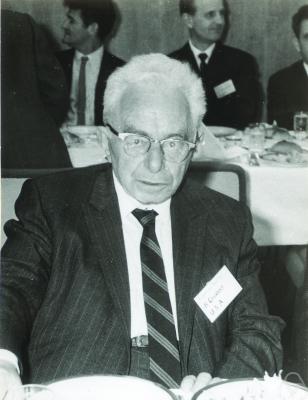
Courant–Friedrichs–Lewy condition
Mathematical condition for convergence
Nº Q1023483 ★★
Not listed
-

Common Lisp
ANSI-standardized dialect of Lisp
Nº Q849146 ★★★
Not listed
-
C
Concurrent logic programming
Logic programming paradigm
Nº Q17008825 ★
Not listed