

Common · Places
Cork Harbour
Harbor
Cork Harbour (Irish: Cuan Chorcaí) is a natural harbour and river estuary at the mouth of the River Lee in County Cork, Ireland. It is one of several which lay claim to the title of "second largest natural harbour in the world by navigational area" (after Port Jackson, Sydney).
On the map
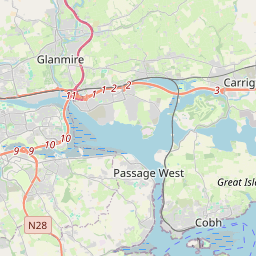
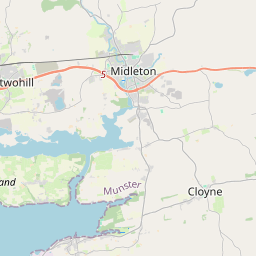
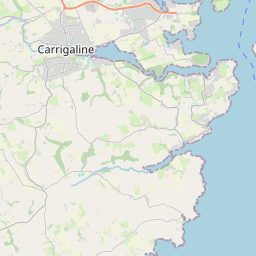
From Wikipedia
Cork Harbour (Irish: Cuan Chorcaí) is a natural harbour and river estuary at the mouth of the River Lee in County Cork, Ireland. It is one of several which lay claim to the title of "second largest natural harbour in the world by navigational area" (after Port Jackson, Sydney). Other contenders include Halifax Harbour in Canada, Trincomalee Harbour in Sri Lanka and Poole Harbour in England. The harbour has been a working port and a strategic defensive hub for centuries, and it has been one of Ireland's major employment hubs since the early 1900s. Traditional heavy industries have waned since the late 20th century, with the likes of the closure of Irish Steel in Haulbowline and shipbuilding at Verolme. It still has strategic significance in energy generation, shipping, refining and pharmaceuticals development. The main tributary to the harbour is the River Lee which, after flowing through Cork city, passes through the upper harbour (Lough Mahon) in the northwest before passing to the west of Great Island with the main channel emerging into the lower harbour past Haulbowline Island. For conservation and navigation purposes, the harbour is often separated into "Upper Cork Harbour" (following the River Lee from Cork city to the towns of Passage West and Monkstown) and "Lower Cork Harbour" (separated from the upper harbour by Great Island). The depth of the harbour has been measured at between 4 fathoms (7.3 m) and 14 fathoms (26 m). Cork Harbour contains a number of islands of various sizes, some of which are connected to the mainland by bridges.
Text: Wikipédia, CC BY-SA 4.0. · Image: edward982 (CC BY 3.0) ·