


DPLL algorithm
Algorithm for solving the CNF-SAT problem
In logic and computer science, the Davis–Putnam–Logemann–Loveland (DPLL) algorithm is a complete, backtracking-based search algorithm for deciding the satisfiability of propositional logic formulae in conjunctive normal form, i.e. for solving the CNF-SAT problem. It was introduced in 1961 by Martin Davis, George Logemann and Donald W. Loveland and is a refinement of the earlier Davis–Putnam algorithm, which is a resolution-based procedure developed by Davis and Hilary Putnam in 1960.
Nº Q2030088 ★★
Uncommon · History
DPLL algorithm
Algorithm for solving the CNF-SAT problem
In logic and computer science, the Davis–Putnam–Logemann–Loveland (DPLL) algorithm is a complete, backtracking-based search algorithm for deciding the satisfiability of propositional logic formulae in conjunctive normal form, i.e. for solving the CNF-SAT problem. It was introduced in 1961 by Martin Davis, George Logemann and Donald W. Loveland and is a refinement of the earlier Davis–Putnam algorithm, which is a resolution-based procedure developed by Davis and Hilary Putnam in 1960.
From Wikipedia
In logic and computer science, the Davis–Putnam–Logemann–Loveland (DPLL) algorithm is a complete, backtracking-based search algorithm for deciding the satisfiability of propositional logic formulae in conjunctive normal form, i.e. for solving the CNF-SAT problem. It was introduced in 1961 by Martin Davis, George Logemann and Donald W. Loveland and is a refinement of the earlier Davis–Putnam algorithm, which is a resolution-based procedure developed by Davis and Hilary Putnam in 1960. Especially in older publications, the Davis–Logemann–Loveland algorithm is often referred to as the "Davis–Putnam method" or the "DP algorithm". Other common names that maintain the distinction are DLL and DPLL.
Text: Wikipédia, CC BY-SA 4.0. · Image: No machine-readable author provided. Tizio assumed (based on... (Public domain) ·
Related cards
-

Floyd–Steinberg dithering
Image dithering algorithm
Nº Q1324107 ★
Not listed
-
D
Delta method
Method in statistics
Nº Q1132714 ★★
Not listed
-

Alan V. Oppenheim
American engineer; Professor of Engineering at MIT's Department of Electrical Engineering and Computer Science
Nº Q1151347 ★★
Not listed
-
B
BitTorrent (software)
Peer-to-peer program for uploading and downloading files via the BitTorrent protocol
Nº Q878713 ★★★
Not listed
-

Divide-and-conquer algorithm
Algorithm design paradigm based on multi-branched recursion
Nº Q671298 ★★
Not listed
-

Collatz conjecture
Conjecture in mathematics that concerns sequences
Nº Q837314 ★★★★
Not listed
-

Knuth–Morris–Pratt algorithm
String searching algorithm
Nº Q45285 ★★
Not listed
-

International Data Encryption Algorithm
Symmetric-key block cipher
Nº Q848204 ★
Not listed
-
I
Introsort
Sorting algorithm
Nº Q1395653 ★
Not listed
-
L
Logical block addressing
Common scheme used for specifying the location of blocks of data stored on computer storage devices
Nº Q1162337 ★
Not listed
-

A Mathematician's Lament
2009 essay by Paul Lockhart
Nº Q3689213 ★
Not listed
-

David McClelland
American psychologist (1917–1998)
Nº Q28876 ★★
Not listed
-
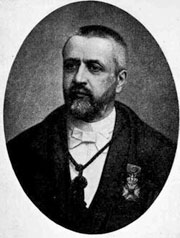
D'Hondt method
Method for allocating seats in parliaments
Nº Q337866 ★★★
Not listed
-
F
Felicific calculus
Algorithm measuring the amount of pleasure that a specific action is likely to cause
Nº Q375444 ★★
Not listed
-
B
Baum–Welch algorithm
Algorithm
Nº Q811478 ★
Not listed
-
L
Lanczos algorithm
Numerical method for find eigenvalues
Nº Q366640 ★★
Not listed
-
T
The Laws of Thought
Book by George Boole
Nº Q7746455 ★
Not listed
-
L
LDAP Data Interchange Format
Standard plain text data interchange format for representing LDAP (Lightweight Directory Access Protocol) directory content and update requests
Nº Q1066897 ★
Not listed