
Fagradalsfjall
Mountain on Southern Peninsula, Iceland
Fagradalsfjall (Icelandic: [ˈfaɣraˌtalsˌfjatl̥] ) is an active tuya volcano formed in the Last Glacial Period on the Reykjanes Peninsula, around 40 kilometres (25 mi) from Reykjavík, Iceland. Fagradalsfjall is also the name for the wider volcanic system covering an area 5 kilometres (3 mi) wide and 16 kilometres (10 mi) long between the Eldvörp–Svartsengi [ˈɛltvœr̥p–ˈsvar̥(t)sˌeiɲcɪ] and Krýsuvík systems.
Nº Q27015522 ★★
Uncommon · Places
Fagradalsfjall
Mountain on Southern Peninsula, Iceland
Fagradalsfjall (Icelandic: [ˈfaɣraˌtalsˌfjatl̥] ) is an active tuya volcano formed in the Last Glacial Period on the Reykjanes Peninsula, around 40 kilometres (25 mi) from Reykjavík, Iceland. Fagradalsfjall is also the name for the wider volcanic system covering an area 5 kilometres (3 mi) wide and 16 kilometres (10 mi) long between the Eldvörp–Svartsengi [ˈɛltvœr̥p–ˈsvar̥(t)sˌeiɲcɪ] and Krýsuvík systems.
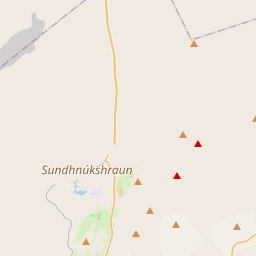
On the map
Last price
—
Floor price
—
7-day median
—
30-day sales
0
30-day range
—
In circulation
0
Price history
median
low – high
sales
No sales in this period
Show table
| Date | median | Low | High | sales |
|---|
Sales history
- Last sale
- —
- 30-day average
- —
- 30-day low
- —
- 30-day high
- —
- Sales 7d
- 0
- Sales 30d
- 0
No sales yet.
Anonymous sales: no buyer or seller shown. Figures count player-to-player sales only.
From Wikipedia
Fagradalsfjall (Icelandic: [ˈfaɣraˌtalsˌfjatl̥] ) is an active tuya volcano formed in the Last Glacial Period on the Reykjanes Peninsula, around 40 kilometres (25 mi) from Reykjavík, Iceland. Fagradalsfjall is also the name for the wider volcanic system covering an area 5 kilometres (3 mi) wide and 16 kilometres (10 mi) long between the Eldvörp–Svartsengi [ˈɛltvœr̥p–ˈsvar̥(t)sˌeiɲcɪ] and Krýsuvík systems. The highest summit in this area is Langhóll [ˈlauŋkˌhoutl̥] (385 m (1,263 ft)). No volcanic eruption had occurred for 815 years on the Reykjanes Peninsula until 19 March 2021 when a fissure vent appeared in Geldingadalir to the south of Fagradalsfjall mountain. The 2021 eruption was effusive and continued emitting fresh lava sporadically until 18 September 2021. The eruption was unique among the volcanoes monitored in Iceland so far and it has been suggested that it could develop into a shield volcano. Due to its relative ease of access from Reykjavík, the volcano has become an attraction for local people and foreign tourists. Another eruption, very similar to the 2021 eruption, began on 3 August 2022, and ceased on 21 August 2022. A third eruption appeared to the north of Fagradalsfjall near Litli-Hrútur [ˈlɪhtlɪ-ˌr̥uːtʏr̥] on 10 July 2023, and ended on 5 August 2023.
Text: Wikipédia, CC BY-SA 4.0. · Image: Steinninn (CC BY 4.0) ·
Related cards

Öræfajökull
Volcano in south-eastern Iceland
Nº Q298119 ★

Snæfellsnes
Peninsula in western Iceland
Nº Q593025 ★★★

Snæfellsjökull
Mountain in Iceland
Nº Q1315012 ★★★

2023–2025 Sundhnúkur eruptions
Volcanic eruptions in Iceland
Nº Q123992305 ★★

Eldvörp–Svartsengi
Volcanic system in Iceland
Nº Q1288839 ★

Eldgjá
Volcano and a canyon in Iceland
Nº Q388641 ★