

Rare · Places
Frutillar
City in Chile
Frutillar is a city and commune located in southern Chile, Chilean Patagonia, in Llanquihue Province, within the Los Lagos Region, the lake district. The bay of Frutillar is placed on the banks of Lake Llanquihue, the largest lake entirely within Chile.
On the map
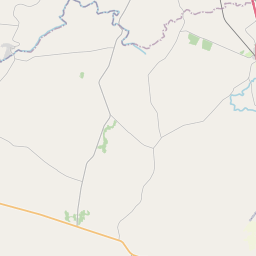
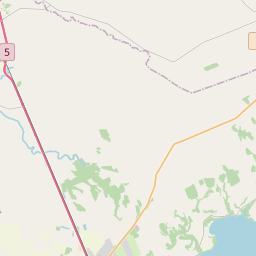
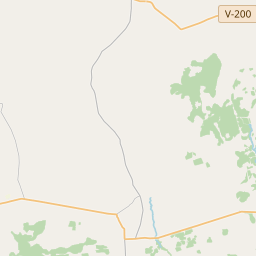
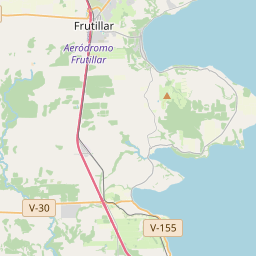
From Wikipedia
Frutillar is a city and commune located in southern Chile, Chilean Patagonia, in Llanquihue Province, within the Los Lagos Region, the lake district. The bay of Frutillar is placed on the banks of Lake Llanquihue, the largest lake entirely within Chile. Frutillar is known as the "City of Music", and since 2017 is part of the UNESCO Creative Cities Network (UCCN), becoming the first Chilean city to be nominated, as well as the southernmost Creative City of Music in the world. The name of the city derived from frutilla, the Spanish for "fragaria", precisely from frutilla chilena, the Spanish term for Fragaria chiloensis, also called in Spanish as frutilla blanca, meaning "white fragaria." After a period of clearing up the land, the city of Frutillar was founded by German settlers in 1856, among them Christian Winkler, Wilhelm Kaschel, Heinrich Kuschel, Theodor Niklitschek, Christian Nannig, Christian Scheel and Adams Schmidt. Vicente Pérez Rosales on a later expedition towards the south of Valdivia changed the course of the incoming colony to Lake Llanquihue. Rosales was searching for more land for the German settlers, south of Valdivia, as many sailing ships were arriving to the port of Valdivia from Germany sent by Bernardo Philippi under the official colonisation program of Southern Chile. This program was granted by President Manuel Bulnes and executed by president of Chile Manuel Montt, officially naming Vicente Perez Rosales the head of the German colonisation of Llanquihue, as a continuation of the initial efforts by Bernard Philippi. Rosales reached the lake through the dense wild forest and climbed to Osorno Volcano and at the height of 2,000 meters he was able to see the ocean to the south where he saw sailing ships navigating. It was the chilotes from Chiloe that had been sailing in the inner waters of Puerto Montt since 1550 and came mainly from Galicia, Spain, which has very similar climate conditions.
Text: Wikipédia, CC BY-SA 4.0. · Image: Hosteria Outsider at German Wikipedia (CC BY-SA 3.0) ·