
Görlitz
Town in Görlitz District, Upper Lusatia, Saxony, Germany
Görlitz ([ˈɡœʁlɪts] ; East Lusatian: Gerlz, Gerltz, Gerltsch; Upper Sorbian: Zhorjelc [ˈzhɔʁʲɛlts] ) is a town in Saxony, Germany. It is on the river Lusatian Neisse and is the largest town in Upper Lusatia, the second-largest town in the region of Lusatia after Cottbus, and the largest town in the German part of the region of Silesia.
Nº Q4077 ★★★★★
Ultra Rare · Places
Görlitz
Town in Görlitz District, Upper Lusatia, Saxony, Germany
Görlitz ([ˈɡœʁlɪts] ; East Lusatian: Gerlz, Gerltz, Gerltsch; Upper Sorbian: Zhorjelc [ˈzhɔʁʲɛlts] ) is a town in Saxony, Germany. It is on the river Lusatian Neisse and is the largest town in Upper Lusatia, the second-largest town in the region of Lusatia after Cottbus, and the largest town in the German part of the region of Silesia.
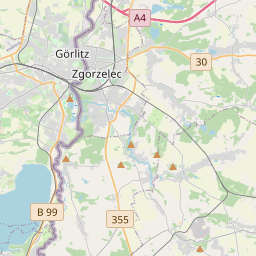
On the map
Last price
—
Floor price
—
7-day median
—
30-day sales
0
30-day range
—
In circulation
0
Price history
median
low – high
sales
No sales in this period
Show table
| Date | median | Low | High | sales |
|---|
Sales history
- Last sale
- —
- 30-day average
- —
- 30-day low
- —
- 30-day high
- —
- Sales 7d
- 0
- Sales 30d
- 0
No sales yet.
Anonymous sales: no buyer or seller shown. Figures count player-to-player sales only.
From Wikipedia
Görlitz ([ˈɡœʁlɪts] ; East Lusatian: Gerlz, Gerltz, Gerltsch; Upper Sorbian: Zhorjelc [ˈzhɔʁʲɛlts] ) is a town in Saxony, Germany. It is on the river Lusatian Neisse and is the largest town in Upper Lusatia, the second-largest town in the region of Lusatia after Cottbus, and the largest town in the German part of the region of Silesia. Görlitz is the easternmost town in Germany and lies opposite the Polish town of Zgorzelec, which was the eastern part of Görlitz until 1945. The town has approximately 56,000 inhabitants, which make Görlitz the sixth-largest town in Saxony. It is the seat of the district of Görlitz. Together with Zgorzelec it forms the Euro City of Görlitz/Zgorzelec, which has a combined population of around 86,000. Görlitz, first mentioned in 1071, developed as a key trading town on the Via Regia route linking Western and Eastern Europe. In the Late Middle Ages, it prospered through the cloth trade and became a member of the Lusatian League, enjoying considerable autonomy. The town came under Bohemian, Austrian and Saxon rule before becoming part of Prussia in 1815 after the Congress of Vienna. During World War II, Görlitz was spared major destruction, but the new Oder–Neisse line in 1945 divided it from its eastern districts, which became Zgorzelec in Poland. In the GDR era, Görlitz was a border town with limited cross-border contact, but after German reunification and Poland’s EU accession, cooperation with Zgorzelec increased. Today, Görlitz is renowned for its well-preserved historic architecture and frequent use as a film location. Görlitz is culturally diverse. Immediately to the west of Görlitz lie Sorbian-speaking parts of Lusatia, and Görlitz was founded and first settled by the Sorbs, a Slavic people. This is evidenced by the name of the town and the etymology of some of its surrounding villages...
Text: Wikipédia, CC BY-SA 4.0. · Image: Schläsinger (CC BY-SA 3.0) ·
Related cards

Zittau
City in the south east of Saxony, Germany
Nº Q157200 ★★★★

Zgorzelec
Town and urban gmina of Poland
Nº Q147929 ★★★★

Löbau
City in Görlitz District, Saxony, Germany
Nº Q156768 ★★★★

Hoyerswerda
Major district town in the district of Bautzen in the German state of Saxony
Nº Q14904 ★★★★
Lusatian League
Historical alliance of six towns in the Upper Lusatia region
Nº Q640813 ★★★

Bautzen
Town in Bautzen District, Saxony, Germany
Nº Q14835 ★★★★★