

Uncommon · Places
Gillenfeld
Municipality of Germany
Gillenfeld is an Ortsgemeinde – a municipality belonging to a Verbandsgemeinde, a kind of collective municipality – in the Vulkaneifel district in Rhineland-Palatinate, Germany. It belongs to the Verbandsgemeinde of Daun, whose seat is in the like-named town.
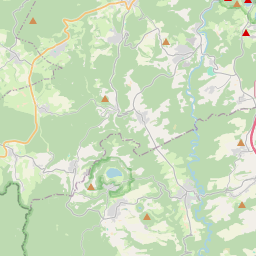
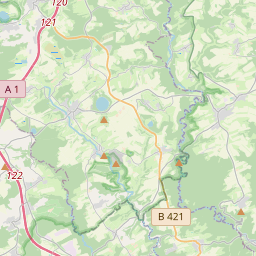
On the map
From Wikipedia
Gillenfeld is an Ortsgemeinde – a municipality belonging to a Verbandsgemeinde, a kind of collective municipality – in the Vulkaneifel district in Rhineland-Palatinate, Germany. It belongs to the Verbandsgemeinde of Daun, whose seat is in the like-named town. The municipality lies in the Vulkaneifel, a part of the Eifel known for its volcanic history, geographical and geological features, and even ongoing activity today, including gases that sometimes well up from the earth. There is a volcanic lake in Gillenfeld, the Pulvermaar, and the Maare-Moselle Cycleway runs through the municipality on the old railway trackbed from Wittlich to Daun. In 1016, Gillenfeld was first documented when Emperor Henry II granted Saint Florian's Foundation in Koblenz market, minting and toll rights at Gilliveld. From 1016 to 1795, the Foundation and the House of Arenberg exercised lordship in Gillenfeld. The French Revolution, which broke out in 1789, made of Gillenfelders free citizens of the French Republic, which at first did nothing to change their lives. This, though, shortly thereafter changed when war broke out between the allied powers of Austria and Prussia on the one hand and France on the other and Gillenfeld began suffering the attendant troop movements. Beginning in 1804, Gillenfelders were for ten years citizens of the French Empire and lay under French hegemony. In 1814 and 1815 came the cession of the whole Eifel to Prussia, and the official language reverted from French to German once again.
Text: Wikipédia, CC BY-SA 4.0. · Image: Friedrich Tellberg (Public domain) ·