
Hornburg
Municipality of Germany
Hornburg (German pronunciation: [ˈhɔʁnˌbʊʁk] ) is a town and a former municipality in the Wolfenbüttel district, in the German state of Lower Saxony. Since 1 November 2013, it is a part of the municipality Schladen-Werla. It is situated on the Ilse river, a tributary of the Oker.
Nº Q542386 ★★★
Rare · Places
Hornburg
Municipality of Germany
Hornburg (German pronunciation: [ˈhɔʁnˌbʊʁk] ) is a town and a former municipality in the Wolfenbüttel district, in the German state of Lower Saxony. Since 1 November 2013, it is a part of the municipality Schladen-Werla. It is situated on the Ilse river, a tributary of the Oker.
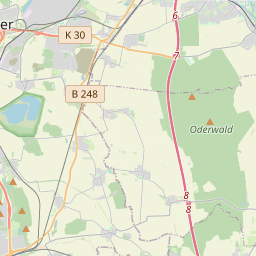
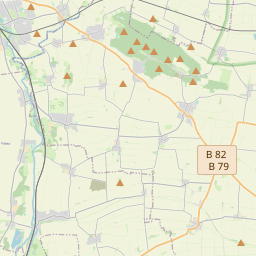
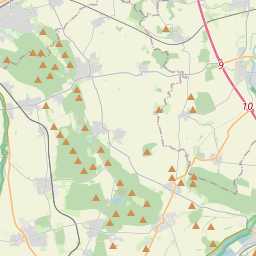
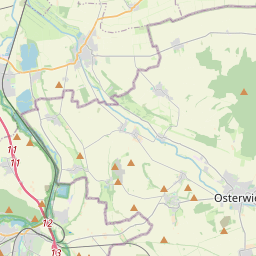
On the map
Last price
—
Floor price
—
7-day median
—
30-day sales
0
30-day range
—
In circulation
0
Price history
median
low – high
sales
No sales in this period
Show table
| Date | median | Low | High | sales |
|---|
Sales history
- Last sale
- —
- 30-day average
- —
- 30-day low
- —
- 30-day high
- —
- Sales 7d
- 0
- Sales 30d
- 0
No sales yet.
Anonymous sales: no buyer or seller shown. Figures count player-to-player sales only.
From Wikipedia
Hornburg (German pronunciation: [ˈhɔʁnˌbʊʁk] ) is a town and a former municipality in the Wolfenbüttel district, in the German state of Lower Saxony. Since 1 November 2013, it is a part of the municipality Schladen-Werla. It is situated on the Ilse river, a tributary of the Oker. Hornburg is part of the Samtgemeinde ('collective municipality') Schladen and home to numerous historically valuable half-timber buildings (Fachwerkhäuser). It is located on the German Timber-Frame Road. Hornburg Castle was first mentioned in a 994 deed as a property of the Bishopric of Halberstadt. In 1005, it was the birthplace of Pope Clement II. The fortress located on a limestone plateau served to control the northern border of the bishopric and the trade routes from Halberstadt to Braunschweig and Hildesheim. It was devastated by Henry the Lion in 1179, during his conflict with the bishop, an ally of Emperor Frederick I Barbarossa, who had the castle rebuilt. In 1528, the attached settlement was denoted as a town by the Halberstadt bishops. It received market rights in 1552. At the same time, Hornburg, thriving from the cultivation of humulus (hop) for beer brewing, was surrounded by a town wall including five gates. The ensemble of about 400 Renaissance timber-framed houses arose after a blaze in 1512 had devastated nearly all of Hornburg's buildings. The reconstruction of the town with elaborately carved Fachwerk houses was modeled after the townscape of Halberstadt. With the bishopric Hornburg turned Protestant in 1540. The parish church Beatae Mariae Virginis is considered one of the first Lutheran hall churches in the region. During the Thirty Years' War Hornburg was occupied by the Imperial field marshal Johann Tserclaes von Tilly in 1626, but conquered by Swedish troops in 1630. In 1645, the Swedish military Hans Christoff von Königsmarck finally had the castle...
Text: Wikipédia, CC BY-SA 4.0. · Image: Doris Antony, Berlin (CC BY-SA 3.0) ·
Related cards

El Jebha
Human settlement
Nº Q1324274 ★★★

Śniardwy
Lake in Poland
Nº Q387256 ★★★

Trabzon Province
Province in northeastern Turkey
Nº Q388995 ★★★
Ganga Expressway
Road in India
Nº Q5520981 ★★★

Great Lakes Waterway
System of channels and canals in the Great Lakes
Nº Q485940 ★★★

West Point, New York
Census-designated place in the U.S. state of New York
Nº Q679753 ★★★