

Common · Places
Hoylake
Seaside town in Wirral, Merseyside, England
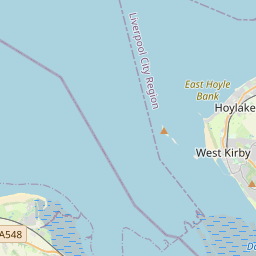
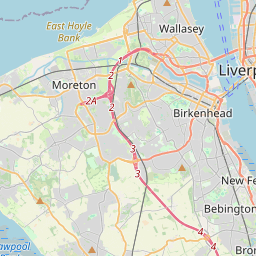
Hoylake () is a seaside town in the Metropolitan Borough of Wirral, Merseyside, England. It is at the north west of the Wirral Peninsula, near West Kirby and where the River Dee meets the Irish Sea. At the 2021 census, the built up area had a population of 5,315.
On the map
From Wikipedia
Hoylake (/hɔɪˈleɪk/) is a seaside town in the Metropolitan Borough of Wirral, Merseyside, England. It is at the north west of the Wirral Peninsula, near West Kirby and where the River Dee meets the Irish Sea. At the 2021 census, the built up area had a population of 5,315. In the nineteenth century, the town grew up around the small fishing village of Hoose (lit. 'hollows'), a settlement that was recorded in the Domesday Book of 1086 within the Hundred of 'Wilaveston' (historically part of Cheshire). The town takes its name from 'Hoyle Lake', a nearby channel of water out towards Hilbre Island that provided a safe anchorage for shipping. In 1690, William III set sail from Hoylake, then known as Hyle or High-lake, with a 10,000-strong army to Ireland, where his army was to take part in the Battle of the Boyne. The location of departure remains known as King's Gap. The previous year a large force under Marshal Schomberg had also departed from Hoylake on 12 August, crossing to Ireland to capture Carrickfergus. The present-day township grew up in the nineteenth century around the small fishing village of Hoose, the name of which means "hollows". The 1848 Topographical Dictionary of England described the inhabitants of Hoose as: "...principally boatmen and fishermen, who have frequently evinced the greatest courage and alacrity in rescuing mariners from the horrors of shipwreck; large banks of sand, extending for miles on the northwest, being annually the scene of most fatal disasters to shipping."
Text: Wikipédia, CC BY-SA 4.0. · Image: Rept0n1x (CC BY-SA 2.0) ·