

Uncommon · Places
Jaba', Haifa
Village in Haifa, Mandatory Palestine
Jaba' (Arabic: جبع), also known as Gaba, or Geba, in historical writings, was a Palestinian Arab village in the Haifa Subdistrict. It was depopulated during the 1948 Arab-Israeli War on July 24, 1948, as part of Operation Shoter.
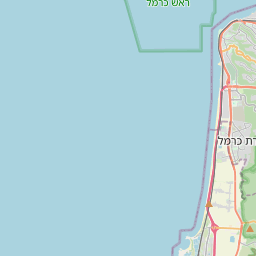
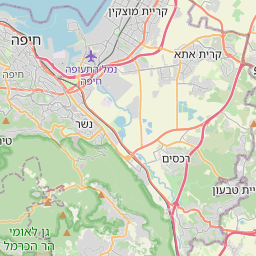
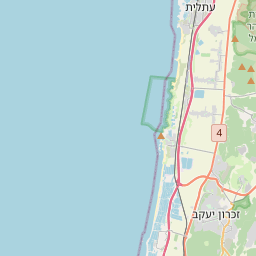
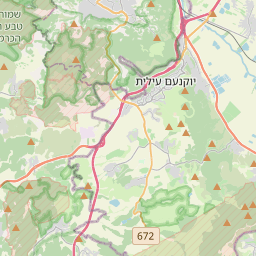
On the map
From Wikipedia
Jaba' (Arabic: جبع), also known as Gaba, or Geba, in historical writings, was a Palestinian Arab village in the Haifa Subdistrict. It was depopulated during the 1948 Arab-Israeli War on July 24, 1948, as part of Operation Shoter. It was located 18.5 km south of Haifa, near Carmel, and ca. 3.25 kilometers (2.02 mi) east of the Mediterranean Sea. Emil Schürer, writing in 1891, identifies this site with a village featuring prominently in the writings of the Jewish historian, Josephus. In the late 1st century BCE, Herod the Great had built a village for his veteran cavalry, and, according to E. Schürer, called this town the city of horsemen. Archaeologist Benjamin Mazar, disputing Schürer in 1957, thought that Gaba of the Horsemen (Geba), mentioned by Josephus in The Jewish War 3.3.1, ought to be identified with the ruin Ḫirbet el-Ḥârithîye (now Sha'ar HaAmakim), since in relation to Simonias, it better fits Josephus' description of Gaba / Gibea (Greek: Γάβα) in Vita § 24 being distant from Simonias 60 stadia (about 11 km.), in addition to the fact that in relation to Besara (Beit She'arin), Gaba / Gibea (Ḫirbet el-Ḥârithîye) stood at a distance of only 20 stadia (about 4 km.) from Besara, also in agreement with Josephus. Jaba' was incorporated into the Ottoman Empire in 1517, like all of Palestine. During the 16th and 17th centuries, Jaba' belonged to the Turabay Emirate (1517–1683), which encompassed also the Jezreel Valley, Haifa, Jenin, Beit She'an Valley, northern Jabal Nablus, Bilad al-Ruha/Ramot Menashe, and the northern part of the Sharon plain. In the 1596 tax registers, it was part of the nahiya ("subdistrict") of Jabal Atlit, part of the larger Sanjak of Lajjun. It had a population of 18 households, all Muslims.
Text: Wikipédia, CC BY-SA 4.0. · Image: Ahmed zeyadah (CC BY-SA 3.0) ·