
Julian March
Geographical and historical region in Southern and Eastern Europe
The Julian March (Croatian and Slovene: Julijska krajina), also called Julian Venetia (Italian: Venezia Giulia; Venetian: Venesia Julia; Friulian: Vignesie Julie; Austrian German: Julisch Venetien), is an area of southern Central Europe which is currently divided among Croatia, Italy, and Slovenia. The term was coined in 1863 by the Italian linguist Graziadio Isaia Ascoli, a native of the area, to demonstrate that the Austrian Littoral, Veneto, Friuli, and Trentino (then all part of the Austrian Empire) shared a common Italian linguistic identi...
Nº Q958521 ★★★★
Super Rare · Places
Julian March
Geographical and historical region in Southern and Eastern Europe
The Julian March (Croatian and Slovene: Julijska krajina), also called Julian Venetia (Italian: Venezia Giulia; Venetian: Venesia Julia; Friulian: Vignesie Julie; Austrian German: Julisch Venetien), is an area of southern Central Europe which is currently divided among Croatia, Italy, and Slovenia. The term was coined in 1863 by the Italian linguist Graziadio Isaia Ascoli, a native of the area, to demonstrate that the Austrian Littoral, Veneto, Friuli, and Trentino (then all part of the Austrian Empire) shared a common Italian linguistic identi...
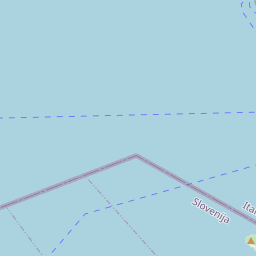
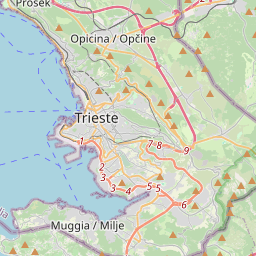
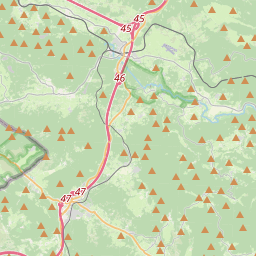
On the map
Last price
—
Floor price
—
7-day median
—
30-day sales
0
30-day range
—
In circulation
0
Price history
median
low – high
sales
No sales in this period
Show table
| Date | median | Low | High | sales |
|---|
Sales history
- Last sale
- —
- 30-day average
- —
- 30-day low
- —
- 30-day high
- —
- Sales 7d
- 0
- Sales 30d
- 0
No sales yet.
Anonymous sales: no buyer or seller shown. Figures count player-to-player sales only.
From Wikipedia
The Julian March (Croatian and Slovene: Julijska krajina), also called Julian Venetia (Italian: Venezia Giulia; Venetian: Venesia Julia; Friulian: Vignesie Julie; Austrian German: Julisch Venetien), is an area of southern Central Europe which is currently divided among Croatia, Italy, and Slovenia. The term was coined in 1863 by the Italian linguist Graziadio Isaia Ascoli, a native of the area, to demonstrate that the Austrian Littoral, Veneto, Friuli, and Trentino (then all part of the Austrian Empire) shared a common Italian linguistic identity. Ascoli emphasized the Augustan partition of Roman Italy at the beginning of the Empire, when Venetia et Histria was Regio X (the Tenth Region). The term was later endorsed by Italian irredentists, who sought to annex regions in which ethnic Italians made up most (or a substantial portion) of the population: the Austrian Littoral, Trentino, Fiume and Dalmatia. The Triple Entente promised the regions to Italy in the dissolution of the Austro-Hungarian Empire in exchange for Italy's joining the Allied Powers in World War I. The secret 1915 Treaty of London promised Italy territories largely inhabited by Italians (such as Trentino) in addition to those largely inhabited by Croats or Slovenes; the territories housed 421,444 Italians, and about 327,000 ethnic Slovenes. A contemporary Italian autonomous region, bordering on Slovenia, is named Friuli-Venezia Giulia ("Friuli and Julian Venetia").
Text: Wikipédia, CC BY-SA 4.0. · Image: Anusmundi (CC BY 2.0) ·
Related cards

Istrian–Dalmatian exodus
Post-World War II expulsion and departure of ethnic Italians from the ethnically mixed Yugoslav territories of Istria, Zadar, and Rijeka
Nº Q2714904 ★★★★

Republic of San Marco
Italian revolutionary state based in Venice
Nº Q2037576 ★★★

Stato da Màr
Maritime and overseas territories of the Republic of Venice
Nº Q1782789 ★★★

Margraviate of Austria
Southeastern frontier march of the Holy Roman Empire, 976–1156
Nº Q283627 ★★★

Central Europe
Region of Europe
Nº Q27509 ★★★★

Istro-Romanians
Ethnic group primarily living in Istria, Croatia
Nº Q1295763 ★★