
Kew
Suburban district in the London Borough of Richmond upon Thames
Kew () is a district in the London Borough of Richmond upon Thames. Its population at the 2011 census was 11,436. Kew is the location of the Royal Botanic Gardens ("Kew Gardens"), now a World Heritage Site, which includes Kew Palace.
Nº Q1740301 ★★
Uncommon · Places
Kew
Suburban district in the London Borough of Richmond upon Thames
Kew () is a district in the London Borough of Richmond upon Thames. Its population at the 2011 census was 11,436. Kew is the location of the Royal Botanic Gardens ("Kew Gardens"), now a World Heritage Site, which includes Kew Palace.
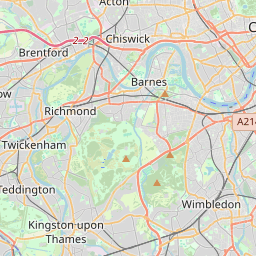
On the map
Last price
—
Floor price
—
7-day median
—
30-day sales
0
30-day range
—
In circulation
0
Price history
median
low – high
sales
No sales in this period
Show table
| Date | median | Low | High | sales |
|---|
Sales history
- Last sale
- —
- 30-day average
- —
- 30-day low
- —
- 30-day high
- —
- Sales 7d
- 0
- Sales 30d
- 0
No sales yet.
Anonymous sales: no buyer or seller shown. Figures count player-to-player sales only.
From Wikipedia
Kew () is a district in the London Borough of Richmond upon Thames. Its population at the 2011 census was 11,436. Kew is the location of the Royal Botanic Gardens ("Kew Gardens"), now a World Heritage Site, which includes Kew Palace. Kew is also the home of important historical documents such as Domesday Book, which is held at The National Archives. Julius Caesar may have forded the Thames at Kew in 54 BC during the Gallic Wars. Successive Tudor, Stuart and Georgian monarchs maintained links with Kew. During the French Revolution, many refugees established themselves there and it was the home of several artists in the 18th and 19th centuries. Since 1965 Kew has incorporated the former area of North Sheen which includes St Philip and All Saints, the first barn church consecrated in England. It is now in a combined Church of England parish with St Luke's Church, Kew. Today, Kew is an expensive residential area because of its prosperous suburban attributes. Among these are sports-and-leisure open spaces, schools, transport links, architecture, restaurants, no high-rise buildings, modest road sizes, trees and gardens. Most of Kew developed in the late 19th century, following the arrival of the District line of the London Underground. Further development took place in the 1920s and 1930s when new houses were built on the market gardens of North Sheen and in the first decade of the 21st century when considerably more river-fronting flats and houses were constructed by the Thames on land formerly owned by Thames Water.
Text: Wikipédia, CC BY-SA 4.0. · Image: Patche99z (Public domain) ·
Related cards

Kew Gardens
Botanical garden and world's largest collection of living plants in the London Borough of Richmond upon Thames
Nº Q188617 ★★★

Kew Palace
Grade I listed historic house museum in London Borough of Richmond upon Thames, United Kingdom
Nº Q1050082 ★★★

Kensington Gardens
Park in London, England, UK
Nº Q822607 ★★

South London
Southern part of London, England
Nº Q1394500 ★★★

Scotland Yard
Headquarters of the Metropolitan Police Service, Westminster, Greater London from October 2016
Nº Q184619 ★★★★

Lloyd's building
Building by Richard Rogers in London
Nº Q1814818 ★★★