
Large Millimeter Telescope
World's largest millimetric telescope, located in Mexico (2011)
The Large Millimeter Telescope (LMT) (Spanish: Gran Telescopio Milimétrico, or GTM), officially the Large Millimeter Telescope Alfonso Serrano (Spanish: Gran Telescopio Milimétrico Alfonso Serrano), is the world's largest single-aperture telescope in its frequency range, built for observing radio waves in the wave lengths from approximately 0.85 to 4 mm. It has an active surface with a diameter of 50 metres (160 ft) and 1,960 square metres (21,100 sq ft) of collecting area.
Nº Q1805920 ★★★
Rare · Places
Large Millimeter Telescope
World's largest millimetric telescope, located in Mexico (2011)
The Large Millimeter Telescope (LMT) (Spanish: Gran Telescopio Milimétrico, or GTM), officially the Large Millimeter Telescope Alfonso Serrano (Spanish: Gran Telescopio Milimétrico Alfonso Serrano), is the world's largest single-aperture telescope in its frequency range, built for observing radio waves in the wave lengths from approximately 0.85 to 4 mm. It has an active surface with a diameter of 50 metres (160 ft) and 1,960 square metres (21,100 sq ft) of collecting area.
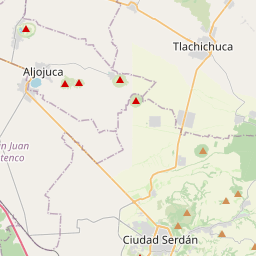
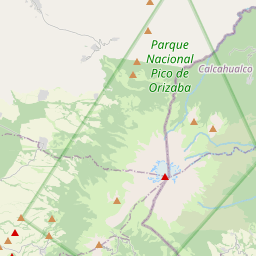
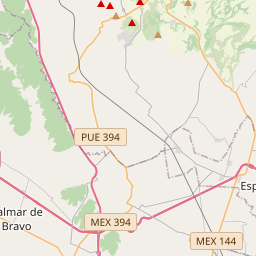
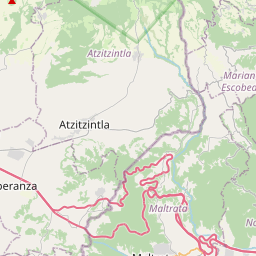
On the map
Last price
—
Floor price
—
7-day median
—
30-day sales
0
30-day range
—
In circulation
0
Price history
median
low – high
sales
No sales in this period
Show table
| Date | median | Low | High | sales |
|---|
Sales history
- Last sale
- —
- 30-day average
- —
- 30-day low
- —
- 30-day high
- —
- Sales 7d
- 0
- Sales 30d
- 0
No sales yet.
Anonymous sales: no buyer or seller shown. Figures count player-to-player sales only.
From Wikipedia
The Large Millimeter Telescope (LMT) (Spanish: Gran Telescopio Milimétrico, or GTM), officially the Large Millimeter Telescope Alfonso Serrano (Spanish: Gran Telescopio Milimétrico Alfonso Serrano), is the world's largest single-aperture telescope in its frequency range, built for observing radio waves in the wave lengths from approximately 0.85 to 4 mm. It has an active surface with a diameter of 50 metres (160 ft) and 1,960 square metres (21,100 sq ft) of collecting area. The telescope is located at an altitude of 4,850 metres (15,910 ft) on top of Sierra Negra, the fifth-highest peak in Mexico and an extinct volcanic companion to Mexico's highest mountain Pico de Orizaba, inside the National Park Pico de Orizaba in the state of Puebla. It is a binational Mexican (70%) – American (30%) joint project of the Instituto Nacional de Astrofísica, Óptica y Electrónica (INAOE) and the University of Massachusetts Amherst. Millimetre-wavelength observations using the LMT give astronomers a view of regions which are obscured by dust in the interstellar medium, thus increasing our knowledge of star formation. The telescope is also particularly fitted for observing solar system planetesimals and planets as well as extra-solar protoplanetary disks which are relatively cold and emit most of their radiation at millimetre wavelengths. The mission of the LMT is to: 1) pursue pioneering research, 2) train future generations of scientists and engineers, and 3) develop new technology for the benefit of society. The LMT mainly studies thermally cold objects, most of which are associated with large amounts of cosmic dust and/or molecular gas. Among the objects of interest are comets, planets, protoplanetary discs, evolved stars, star-forming regions and galaxies, molecular clouds, active galactic nuclei (AGNs), high-redshift galaxies, clusters of galaxies, and the cosmic microwave background. The LMT has a bent Cassegrain optical system with a 50m-diameter reflecting primary surface...
Text: Wikipédia, CC BY-SA 4.0. · Image: Luyten (CC BY-SA 3.0) ·
Related cards

Orzysz
City of Poland
Nº Q989833 ★★★

Hollands Diep
River in the Netherlands
Nº Q957787 ★★★

Yongin
City in Gyeonggi Province, South Korea
Nº Q18459 ★★★

Wandsworth
District of Southwest London
Nº Q2166359 ★★★

Siargao
Island in the Philippines
Nº Q2280814 ★★★

Stříbrná Skalice
Village in Praha-východ District of Central Bohemian region
Nº Q1827619 ★★★