
Limeuil
Commune in Dordogne, France
Limeuil (French pronunciation: [limœj]; Occitan: Limuèlh) is a commune in the Dordogne department in Nouvelle-Aquitaine in southwestern France. Limeuil village is located at the confluence of the Dordogne and Vézère rivers.
Nº Q473001 ★★★
Rare · Places
Limeuil
Commune in Dordogne, France
Limeuil (French pronunciation: [limœj]; Occitan: Limuèlh) is a commune in the Dordogne department in Nouvelle-Aquitaine in southwestern France. Limeuil village is located at the confluence of the Dordogne and Vézère rivers.
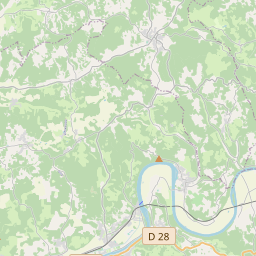
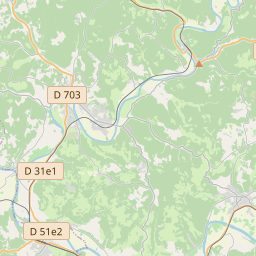
On the map
Last price
—
Floor price
—
7-day median
—
30-day sales
0
30-day range
—
In circulation
0
Price history
median
low – high
sales
No sales in this period
Show table
| Date | median | Low | High | sales |
|---|
Sales history
- Last sale
- —
- 30-day average
- —
- 30-day low
- —
- 30-day high
- —
- Sales 7d
- 0
- Sales 30d
- 0
No sales yet.
Anonymous sales: no buyer or seller shown. Figures count player-to-player sales only.
From Wikipedia
Limeuil (French pronunciation: [limœj]; Occitan: Limuèlh) is a commune in the Dordogne department in Nouvelle-Aquitaine in southwestern France. Limeuil village is located at the confluence of the Dordogne and Vézère rivers. Historically this location at the meeting of the two major local rivers gave Limeuil immense importance – both commercially and strategically. In medieval times, the rivers were the highways of trade, and to be at the convergence of two of them was a unique advantage in the region: this was, historically, primarily a wine-producing area, much of the wine quite 'rough', but the casks of relatively better wine were delivered into the 'chais' at Limeuil, for subsequent delivery downstream to Bordeaux, on large, flat-bottomed 'gabarres' [See 'the wine trade', below]. The rivermen had to be accommodated here, and to this day the riverside bar/restaurant bears the name L'ancre de Salut – a boatsman's term meaning literally 'the safety anchor', a place where the rivermen could find food, wine, a bed, and rest, before their return up river. The church at the top of the village [there are two churches – see 'Churches' below] is, significantly, named after Ste Catherine, who was the patron saint of boat people. Strategically, Limeuil consequently had to defend itself (and its inhabitants) from the relentless waves of territory-grabbing that arose from the Hundred Years' War, and the Wars of Religion – endless 'chevauchées' [see 'Medieval Wars' below] that would see the locality relentlessly under attack, for over two hundred years (the so-called Hundred Years' War lasted, in fact, for 116 years!) The hillside promontory on which the village is situated provides a natural defence – and was surmounted by a chateau, enclosed within its defensive circular stone walls [see 'The Chateau'] below. Today this unique medieval village remains almost intact, and has been completely...
Text: Wikipédia, CC BY-SA 4.0. · Image: Père Igor (CC BY-SA 4.0) ·
Related cards

Veluwe
Forested hilly area with multiple kinds of terrain, including wetland and heathland
Nº Q1153251 ★★★

Fallujah
City in the province of Al Anbar, Iraq
Nº Q191170 ★★★

Davao City
City of the Philippines
Nº Q1473 ★★★

Grande Comore
Largest island of the Comoros
Nº Q244978 ★★★

Ukok Plateau
Plateau in Altai Mountains
Nº Q264227 ★★★

Białowieża National Park
National park in Poland
Nº Q6870388 ★★★