

Uncommon · Knowledge
Monody
In music, a solo vocal style distinguished by having a single melodic line and instrumental accompaniment.
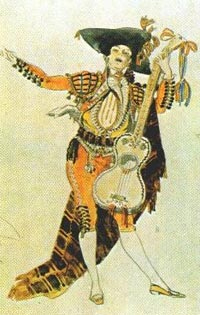
In music, monody refers to a solo vocal style distinguished by having a single melodic line and instrumental accompaniment. Although such music is found in various cultures throughout history, the term is specifically applied to Italian song of the early 17th century, particularly the period from about 1600 to 1640.
From Wikipedia
In music, monody refers to a solo vocal style distinguished by having a single melodic line and instrumental accompaniment. Although such music is found in various cultures throughout history, the term is specifically applied to Italian song of the early 17th century, particularly the period from about 1600 to 1640. The term is used both for the style and for individual songs (so one can speak both of monody as a whole as well as a particular monody). The term itself is a recent invention of scholars. No composer of the 17th century ever called a piece a monody. Compositions in monodic form might be called madrigals, motets, or even concertos (in the earlier sense of stile concertato, meaning "with instruments").
Text: Wikipédia, CC BY-SA 4.0. · Image: Giulio Caccini (Public domain) ·
Related cards
-
 ★★★
★★★
Melody
Succession that produces the continuity of the notes including changes in pitch and duration
-
 ★★★
★★★
Lied
Classical art song in the German tradition
-
 ★★★
★★★
Palinode
Retraction of beliefs or statement previously stated, originally poetic
-
r★★★
rhapsody
Work of epic poetry
-
M★
Monosemy
Characteristic where a sign has a single meaning
-
 ★★★
★★★
Aria
Musical piece for a single voice as part of a larger work