
Motu Nui
Islet off the southwestern coast of Easter Island
Motu Nui is the largest of the islets located off the southwestern coast of Easter Island (Rapa Nui) and constitutes the westernmost point of Chile. Covering an area of 3.9 hectares, it is the summit of a submerged volcanic mountain that rises over 2,000 meters from the seafloor.
Nº Q2288219 ★★★
Rare · Places
Motu Nui
Islet off the southwestern coast of Easter Island
Motu Nui is the largest of the islets located off the southwestern coast of Easter Island (Rapa Nui) and constitutes the westernmost point of Chile. Covering an area of 3.9 hectares, it is the summit of a submerged volcanic mountain that rises over 2,000 meters from the seafloor.
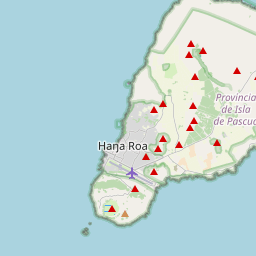
On the map



Last price
—
Floor price
—
7-day median
—
30-day sales
0
30-day range
—
In circulation
0
Price history
median
low – high
sales
No sales in this period
Show table
| Date | median | Low | High | sales |
|---|
Sales history
- Last sale
- —
- 30-day average
- —
- 30-day low
- —
- 30-day high
- —
- Sales 7d
- 0
- Sales 30d
- 0
No sales yet.
Anonymous sales: no buyer or seller shown. Figures count player-to-player sales only.
From Wikipedia
Motu Nui is the largest of the islets located off the southwestern coast of Easter Island (Rapa Nui) and constitutes the westernmost point of Chile. Covering an area of 3.9 hectares, it is the summit of a submerged volcanic mountain that rises over 2,000 meters from the seafloor. Motu Nui is one of the five satellite islets of Easter Island and is notable for being among the three closest landmasses to Point Nemo, the oceanic pole of inaccessibility. The other two are Ducie Island (Pitcairn Islands) and Maher Island (Antarctica). Historically, Motu Nui played a central role in the Tangata manu ("bird-man") cult, a religious tradition that developed after the moai-building period and before the widespread adoption of Christianity in the 1860s. Each year, representatives (Hopu) from different clans would swim to Motu Nui to await the arrival of the manutara (sooty tern). The first Hopu to retrieve an egg would return to Easter Island and present it to his patron at Orongo, a ceremonial village on the rim of the Rano Kau crater. The sponsor would then be declared the Tangata manu and hold ritual authority for one year. The ritual was hazardous, with frequent fatalities from shark attacks or falls. The victorious clan gained exclusive rights to collect seabird eggs and chicks from the islets. The last known competition took place in 1888. The Routledge expedition of 1914 conducted a scientific survey of Motu Nui and recorded six species of nesting seabirds in addition to the sooty tern. They also documented two caves formerly used during the Tangata manu ritual, one for sheltering the Hopu and another that housed Moai Maea, a small moai known as "The Boundary of the Land", which had already been removed to the Pitt Rivers Museum in Oxford, England. Nearby islets include Motu...
Text: Wikipédia, CC BY-SA 4.0. · Image: TravelingOtter (CC BY 2.0) ·
Related cards

Rapa Nui National Park
Chilean national park, in Easter Island
Nº Q1763364 ★★

Maher Island
Island of Antarctica
Nº Q6733830 ★★

Easter Island
Polynesian island and special territory of Chile
Nº Q14452 ★★★★★

Salas y Gómez Island
Uninhabited Pacific island of Chile
Nº Q118821 ★★★

Hawaii hotspot
Hotspot
Nº Q1034528 ★

Manaro Voui
Mountain
Nº Q1535985 ★★★★