
Pasig River
River in the Philippines
The Pasig River (Filipino: Ilog Pasig; Spanish: Río Pásig) is a water body in the Philippines that connects Laguna de Bay to Manila Bay. Stretching for 25.2 kilometers (15.7 mi), it bisects the Philippine capital of Manila and its surrounding urban area into northern and southern halves.
Nº Q1156477 ★
Common · Places
Pasig River
River in the Philippines
The Pasig River (Filipino: Ilog Pasig; Spanish: Río Pásig) is a water body in the Philippines that connects Laguna de Bay to Manila Bay. Stretching for 25.2 kilometers (15.7 mi), it bisects the Philippine capital of Manila and its surrounding urban area into northern and southern halves.
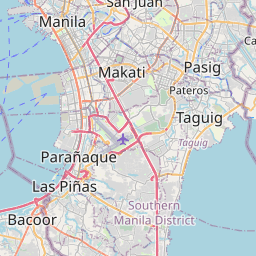
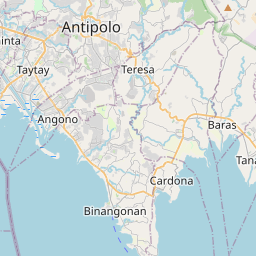
On the map
Last price
—
Floor price
—
7-day median
—
30-day sales
0
30-day range
—
In circulation
0
Price history
median
low – high
sales
No sales in this period
Show table
| Date | median | Low | High | sales |
|---|
Sales history
- Last sale
- —
- 30-day average
- —
- 30-day low
- —
- 30-day high
- —
- Sales 7d
- 0
- Sales 30d
- 0
No sales yet.
Anonymous sales: no buyer or seller shown. Figures count player-to-player sales only.
From Wikipedia
The Pasig River (Filipino: Ilog Pasig; Spanish: Río Pásig) is a water body in the Philippines that connects Laguna de Bay to Manila Bay. Stretching for 25.2 kilometers (15.7 mi), it bisects the Philippine capital of Manila and its surrounding urban area into northern and southern halves. Its major tributaries are the Marikina River and San Juan River. The total drainage basin of the Pasig River, including the basin of Laguna de Bay, covers 4,678 square kilometers (1,806 sq mi). The Pasig River is technically a tidal estuary, as the flow direction depends upon the water level difference between Manila Bay and Laguna de Bay. During the dry season, the water level in Laguna de Bay is low with the river's flow direction dependent on the tides. During the wet season, when the water level of Laguna de Bay is high, the flow is reversed towards Manila Bay. The Pasig River used to be an important transport route and source of water for Spanish Manila. Due to negligence and industrial development, the river suffered a rapid decline in the second half of the 20th century and was declared biologically dead in 1990. Two decades after that declaration, however, a renaturation program designed to revive the river has seen the return of life to the river, including eight fish species, 39 species of birds, and 118 species of trees and other vegetation. As a result, the Pasig River received the Asia Riverprize by the International River Foundation in 2019. The Pasig River Rehabilitation Commission (PRRC) was a Philippine government agency established to oversee rehabilitation efforts for the river from 1999 until it was abolished in November 2019. Rehabilitation efforts are also aided by private sector organizations through raising funds or assisting river cleanups.
Text: Wikipédia, CC BY-SA 4.0. · Image: Vyacheslav Argenberg (CC BY 4.0) ·
Related cards

Pasig
City of the Philippines in Metro Manila
Nº Q1624 ★★

Marikina River
River in the Philippines
Nº Q3551251 ★

Laguna de Bay
Largest lake in the Philippines
Nº Q47136 ★★

Manila Bay
Natural harbour, industrial port of Manila on Luzon
Nº Q676154 ★

Estuary of Bilbao
At the mouth of the rivers Nervion, Ibaizabal and Cadagua
Nº Q2731872 ★★★

Maynila (historical polity)
Major historical polity in Luzon, on the southern part of the Pasig River delta, at the location of present-day Intramuros, Manila
Nº Q4401247 ★