


Project 25
Standards for public safety digital mobile radio used in North America
Project 25 (P25 or APCO-25) is a suite of standards for interoperable Land mobile radio system (LMR) systems designed primarily for public safety users. The standards allow analog conventional, digital conventional, digital trunked, or mixed-mode systems.
Nº Q296115 ★★
Uncommon · Literature
Project 25
Standards for public safety digital mobile radio used in North America
Project 25 (P25 or APCO-25) is a suite of standards for interoperable Land mobile radio system (LMR) systems designed primarily for public safety users. The standards allow analog conventional, digital conventional, digital trunked, or mixed-mode systems.
From Wikipedia
Project 25 (P25 or APCO-25) is a suite of standards for interoperable Land mobile radio system (LMR) systems designed primarily for public safety users. The standards allow analog conventional, digital conventional, digital trunked, or mixed-mode systems. P25 was originally developed for public safety users in the United States but has also gained acceptance for security, public service, and some commercial applications worldwide. P25 radios are a replacement for analog UHF (typically FM) radios, adding the ability to transfer data as well as voice for more natural implementations of encryption and text messaging. P25 radios are commonly implemented by dispatch organizations, such as police, fire, ambulance and emergency rescue service, using vehicle-mounted radios combined with repeaters and handheld walkie-talkies. Starting around 2012, products became available with the newer Phase II modulation protocol. The older protocol known as P25 became P25 Phase I. P25 Phase II (or P25II) products use the more advanced AMBE2+ vocoder, which allows audio to pass through a more compressed bitstream and provides two TDMA voice channels in the same RF bandwidth (12.5 kHz), while Phase I can provide only one voice channel. However, P25 Phase II infrastructure can provide a "dynamic transcoder" feature that translates between Phase I and Phase II as needed. In addition to this, Phase II radios are backwards compatible with Phase I modulation and analog FM modulation, per the standard. (Phase I radios cannot operate on Phase II trunked systems. However, Phase II radios can operate on Phase I systems or conventional systems.) The European Telecommunications Standards Institute (ETSI) has created the Terrestrial Trunked Radio (TETRA) and Digital mobile radio (DMR) protocol standards, which fill a similar role to Project 25.
Text: Wikipédia, CC BY-SA 4.0. · Image: Evan Forester (Public domain) ·
Related cards
-
A
AX.25
Internet protocol
Nº Q300250 ★
Not listed
-

X.25
Standard protocol suite for packet switched wide area network (WAN) communication
Nº Q622993 ★★
Not listed
-

Digital Audio Broadcasting
Digital radio standard
Nº Q815830 ★★★★
Not listed
-
P
PACTOR
Digital radio modulation mode
Nº Q568281 ★
Not listed
-
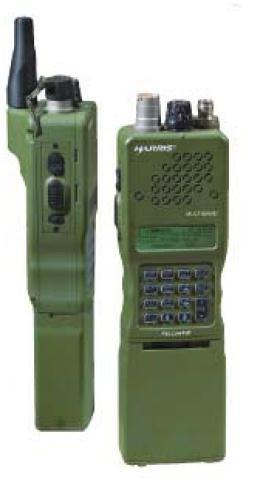
AN/PRC-152
US military multiband handheld radio
Nº Q4032977 ★
Not listed
-
O
OPC Unified Architecture
Computer network protocol. Industrial communication and information modelling standard for interoperability. Specified as the IEC 62541 series
Nº Q623244 ★★★
Not listed