
Rakhigarhi
Largest Indus valley civilization site
Rakhigarhi or Rakhi Garhi (Hindi: [ɾaːkʰiːɡəɽʰiː]) is a village and an archaeological site in the Hansi district of the northern Indian state of Haryana, situated about 150 km northwest of Delhi. It is located in the Ghaggar River plain, some 27 km from the seasonal Ghaggar river, and belonged to the Indus Valley Civilisation, being part of the pre-Harappan (6000?/4600-3300 BC), early Harappan (3300-2600 BC), and the mature phase (2600-1900 BC) of the Indus Valley Civilisation.
Nº Q3418050 ★★
Uncommon · Places
Rakhigarhi
Largest Indus valley civilization site
Rakhigarhi or Rakhi Garhi (Hindi: [ɾaːkʰiːɡəɽʰiː]) is a village and an archaeological site in the Hansi district of the northern Indian state of Haryana, situated about 150 km northwest of Delhi. It is located in the Ghaggar River plain, some 27 km from the seasonal Ghaggar river, and belonged to the Indus Valley Civilisation, being part of the pre-Harappan (6000?/4600-3300 BC), early Harappan (3300-2600 BC), and the mature phase (2600-1900 BC) of the Indus Valley Civilisation.
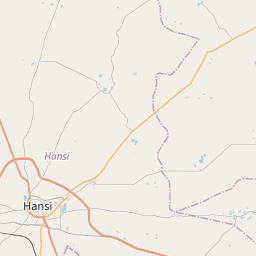
On the map
Last price
—
Floor price
—
7-day median
—
30-day sales
0
30-day range
—
In circulation
0
Price history
median
low – high
sales
No sales in this period
Show table
| Date | median | Low | High | sales |
|---|
Sales history
- Last sale
- —
- 30-day average
- —
- 30-day low
- —
- 30-day high
- —
- Sales 7d
- 0
- Sales 30d
- 0
No sales yet.
Anonymous sales: no buyer or seller shown. Figures count player-to-player sales only.
From Wikipedia
Rakhigarhi or Rakhi Garhi (Hindi: [ɾaːkʰiːɡəɽʰiː]) is a village and an archaeological site in the Hansi district of the northern Indian state of Haryana, situated about 150 km northwest of Delhi. It is located in the Ghaggar River plain, some 27 km from the seasonal Ghaggar river, and belonged to the Indus Valley Civilisation, being part of the pre-Harappan (6000?/4600-3300 BC), early Harappan (3300-2600 BC), and the mature phase (2600-1900 BC) of the Indus Valley Civilisation. It was one of the five largest settlements of the ancient civilisation, with most scholars prior to 2014 reporting it to have been between 80 hectares and 100+ hectares in area, comprising five closely-integrated archaeological mounds as the extent of mature-phase urban habitations. A sixth mound situated in the vicinity, but outside of this group, represented a distinct older period and was likely a separate settlement, while a seventh mound was a cemetery or burial ground belonging to the mature phase. The discovery of two more mounds (in addition to the seven that were already known)—respectively situated approximately 1 km north/east and 1 km south/west of the main group of mounds—was made in 2014: it consequently was claimed by the Archaeological Survey of India (ASI) that the discovery made Rakhigarhi the largest-known site of the Harappan Civilisation, with the spread of archaeological remains being encompassed within a total area of 300 to 350 hectares. However, this figure includes outlying remains which were likely not all integrated as part of a single urban settlement at any singular time. Initial excavations at the site happened in the 1960s, followed by further excavations in the late 1990s, however more sustained excavations have taken place from 2012 to 2016 and 2021 to 2022. though much of the area is yet to be excavated and published. Other related excavation...
Text: Wikipédia, CC BY-SA 4.0. · Image: Nomu420 (CC BY-SA 3.0) ·
Related cards

History of Rajasthan
Aspect of history
Nº Q3634697 ★

History of Punjab
Aspect of history regarding the Punjab region in the northwest of the Indian subcontinent
Nº Q1250734 ★★

Indus Valley Civilisation
Bronze Age civilisation in South Asia
Nº Q42534 ★★★★

Haryana
State in North India
Nº Q1174 ★★★★

Haryanvi language
Western Hindi language closely related to Hindi widely spoken in the North Indian state of Haryana and in Delhi
Nº Q33410 ★★

Bokaro Steel City
Steel city of India
Nº Q861827 ★★