Runan Commandery
Former administrative territorial entity in China
Runan Commandery (Chinese: 汝南郡) was a Chinese commandery from Han dynasty to Tang dynasty, located in modern Henan and Anhui provinces. The name referred to its location to the south of Ru River (汝水), a historical river that flowed into the Huai. Runan was part of the Huaiyang Kingdom in early Western Han dynasty.
Nº Q11133571 ★
Common · Places
Runan Commandery
Former administrative territorial entity in China
Runan Commandery (Chinese: 汝南郡) was a Chinese commandery from Han dynasty to Tang dynasty, located in modern Henan and Anhui provinces. The name referred to its location to the south of Ru River (汝水), a historical river that flowed into the Huai. Runan was part of the Huaiyang Kingdom in early Western Han dynasty.
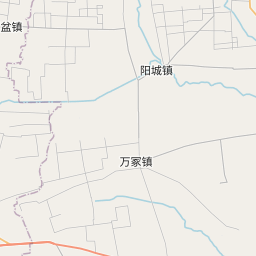
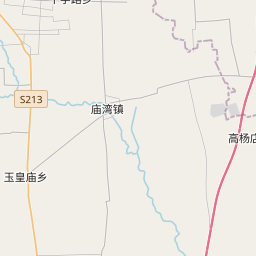
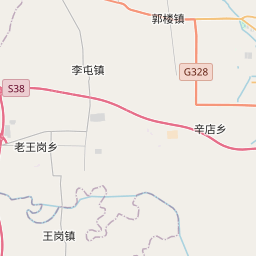
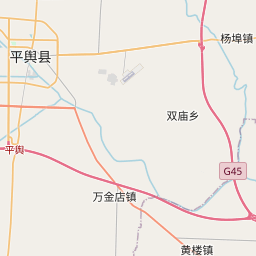
On the map
Last price
—
Floor price
—
7-day median
—
30-day sales
0
30-day range
—
In circulation
0
Price history
median
low – high
sales
No sales in this period
Show table
| Date | median | Low | High | sales |
|---|
Sales history
- Last sale
- —
- 30-day average
- —
- 30-day low
- —
- 30-day high
- —
- Sales 7d
- 0
- Sales 30d
- 0
No sales yet.
Anonymous sales: no buyer or seller shown. Figures count player-to-player sales only.
From Wikipedia
Runan Commandery (Chinese: 汝南郡) was a Chinese commandery from Han dynasty to Tang dynasty, located in modern Henan and Anhui provinces. The name referred to its location to the south of Ru River (汝水), a historical river that flowed into the Huai. Runan was part of the Huaiyang Kingdom in early Western Han dynasty. In 156 BC, Runan was granted to Liu Fei, son of the reigning Emperor Jing as a principality. A year later, Fei's fief was changed to Jiangdu (江都), and Runan became a commandery. In late Western Han dynasty, it administered 37 counties, Pingyu (平輿), Yang'an (陽安), Yangcheng (陽城), Liqiang (郦強), Fubo (富波), Nüyang (女陽), Tongyang (鮦陽), Wufang (吳房), Ancheng (安成), Nandun (南頓), Langling (朗陵), Xiyang (細陽), Yichun (宜春), Nüyin (女陰), Xincai (新蔡), Xinxi (新息), Quyang (灈陽), Qisi (期思), Shenyang (慎陽), Shen (慎), Zhaoling (召陵), Yiyang (弋陽), Xiping (西平), Shangcai (上蔡), Qin (浸), Xihua (西華), Changping (長平), Xilu (宜祿), Xiang (項), Xinqi (新郪), Guide (歸德), Xinyang (新陽), Anchang (安昌), Anyang (安陽), Boyang (博陽), Chengyang (成陽) and Dingling (定陵). In 2 AD, the population was 2,596,148, in 461,587 households. In 140 AD during Eastern Han dynasty, the commandery administered 37 counties and had a population of 2,100,788, in 404,448 households. Two new commanderies, Yiyang and Ruyin (汝陰) was separated from Runan under Emperor Wen of Wei and Emperor Wu of Jin, respectively. In 280 AD, Runan Commandery retained 15 counties with the population was 21,500 households, while the three commanderies together had a population of 46,700 households. During Emperor Hui's reign, two new commanderies, Xincai and Nandun, were established in the region. Under Northern Wei, the commandery consisted of 8 counties, and the Book of Wei recorded a population of 37,061, or 15,889 households. The commandery was abolished in early Sui dynasty. Runan was part of Yu Prefecture...
Text: Wikipédia, CC BY-SA 4.0. ·
Related cards
Henan Commandery
Commandery in China from Han dynasty to Tang dynasty
Nº Q11553546 ★★
Henei Commandery
Ancient Chinese political subdivision
Nº Q10770561 ★
Yingchuan Commandery
Chinese Warring States commandery
Nº Q13624488 ★★
Pingyuan Commandery
Historical commandery of China
Nº Q11060733 ★
Changshan Commandery
Historical commandery of China located in present-day southern Hebei province
Nº Q11060338 ★
Liaoxi Commandery
Ancient Chinese political subdivision
Nº Q11642666 ★★