
Sélestat
Commune in Bas-Rhin, France
Sélestat (French: [selɛsta]; Alsatian: Schlettstàdt; German: Schlettstadt) is a commune in the Grand Est region of France. An administrative division (sous-préfecture) of the Bas-Rhin department, the town lies on the Ill river, 17 kilometres (11 mi) from the Rhine and the German border.
Nº Q22737 ★★★★
Super Rare · Places
Sélestat
Commune in Bas-Rhin, France
Sélestat (French: [selɛsta]; Alsatian: Schlettstàdt; German: Schlettstadt) is a commune in the Grand Est region of France. An administrative division (sous-préfecture) of the Bas-Rhin department, the town lies on the Ill river, 17 kilometres (11 mi) from the Rhine and the German border.
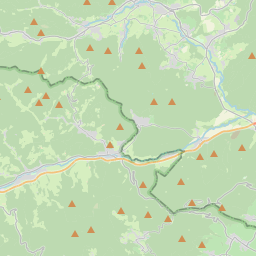
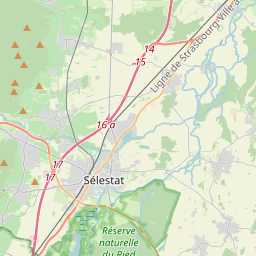
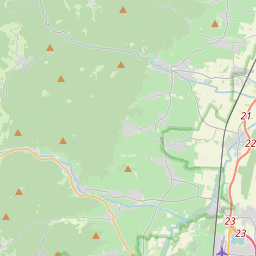
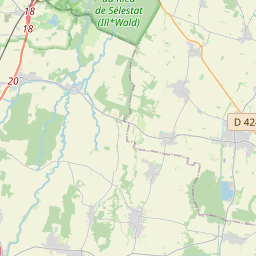
On the map
Last price
—
Floor price
—
7-day median
—
30-day sales
0
30-day range
—
In circulation
0
Price history
median
low – high
sales
No sales in this period
Show table
| Date | median | Low | High | sales |
|---|
Sales history
- Last sale
- —
- 30-day average
- —
- 30-day low
- —
- 30-day high
- —
- Sales 7d
- 0
- Sales 30d
- 0
No sales yet.
Anonymous sales: no buyer or seller shown. Figures count player-to-player sales only.
From Wikipedia
Sélestat (French: [selɛsta]; Alsatian: Schlettstàdt; German: Schlettstadt) is a commune in the Grand Est region of France. An administrative division (sous-préfecture) of the Bas-Rhin department, the town lies on the Ill river, 17 kilometres (11 mi) from the Rhine and the German border. Sélestat is located between the largest communes of Alsace, Strasbourg and Mulhouse. In 2023, Sélestat had a total population of 19,589. First mentioned in the 8th century, Sélestat later became a free imperial city of the Holy Roman Empire and prospered as a member of the Décapole. During the Renaissance, it was a noted centre of humanism. Sélestat's fortunes declined amid the turmoil of the Reformation and experienced constant warfare. Following the Peace of Westphalia in 1648, it was formally annexed by France, under which its decline continued though it remained a town of strategic importance. Sélestat's city walls, reconstructed by Vauban in the late 17th century, were demolished in 1874 after the town (as part of Alsace–Lorraine) was annexed by the German Empire. It became French again after the First World War, was again (informally) annexed by Germany during the Second World War, before finally returning to France. Since 1945, Sélestat has experienced steady growth and become a regional industrial centre and commercial hub. Sélestat's well-preserved old town features a distinct blend of French and German cultural heritage and is site to numerous architectural landmarks from the Middle Ages and Renaissance. The Humanist Library, inscribed by UNESCO in its Memory of the World Register, houses one of the oldest and most homogeneous collections of medieval and Renaissance works in Europe.
Text: Wikipédia, CC BY-SA 4.0. · Image: Oie blanche (CC BY-SA 3.0) ·
Related cards

Soultzmatt
Commune in Haut-Rhin, France
Nº Q263758 ★★★

Brumath
Commune in Bas-Rhin, France
Nº Q22637 ★★★

Molsheim
Commune in Bas-Rhin, France
Nº Q22697 ★★★★

Zeelst
Neighborhood in Veldhoven, Netherlands
Nº Q2376179 ★★★

Lingolsheim
Commune in Bas-Rhin, France
Nº Q21388 ★★★

La Petite-Pierre
Commune in Bas-Rhin, France
Nº Q22389 ★★★