

Uncommon · Places
Samad, Syria
Village in Syria
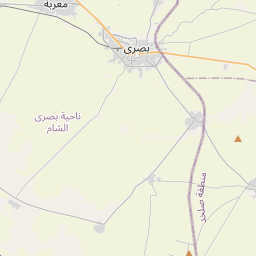
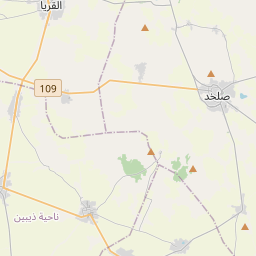
Samad (Arabic: صماد; transliteration: Ṣamād, also spelled Smad) is a village in southern Syria, administratively part of the Daraa Governorate, located east of Daraa and immediately southeast of Bosra. Other nearby localities include al-Qurayya to the northeast, Hout to the east and Dhibin to the southeast.
On the map
From Wikipedia
Samad (Arabic: صماد; transliteration: Ṣamād, also spelled Smad) is a village in southern Syria, administratively part of the Daraa Governorate, located east of Daraa and immediately southeast of Bosra. Other nearby localities include al-Qurayya to the northeast, Hout to the east and Dhibin to the southeast. According to the Syria Central Bureau of Statistics (CBS), Samad had a population of 3,098 in the 2004 census. Its inhabitants are predominantly Sunni Muslim. An inscription dating back was found in Samad dating back to the Roman era testifying that a "public speaker's rostrum" was built by the local Arab tribe of Daban (Dabanenoi) in the village of Samad. During the late Mamluk era in the 15th century, Samad was the home of the Samadiyya branch of the Qadiriyya Sufi order founded by a certain Shaykh Salim, a student of Abd al-Qadir al-Gilani (died 1166). Leadership of the Samadiyya order was hereditary and led by Shaykh Salim's descendants from their zawiya (Sufi lodge) in Samad. In 1518, the Samadiyya order's sheikh (religious leader) Muhammad ibn Khalil ibn Ali ibn Isa ibn Ahmad al-Samadi (1505–1541) gained an audience with the Ottoman sultan Selim I and secured imperial support for his order (tariqa). He also relocated its principal zawiya to the as-Salihiyya suburb of Damascus in 1520 and then erected a new principal zawiya in the Shaghur neighborhood in 1525. The order was named after Samad and maintained its name after the move of its main headquarters to Damascus during the early Ottoman era.
Text: Wikipédia, CC BY-SA 4.0. ·