

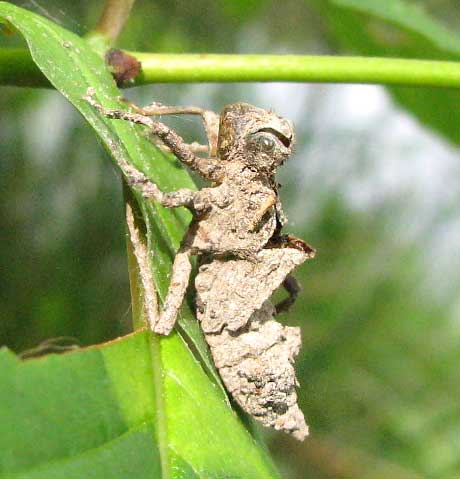
Sclerotin
Component of the cuticles of various Arthropoda
Sclerotin is a component of the cuticle of various Arthropoda, most familiarly insects. It is formed by cross-linking members of particular classes of protein molecules, a biochemical process called sclerotization, a form of tanning in which quinones are enzymatically introduced into the cuticle, and react with terminal and side chain–related amino groups in the proteins to form strong links between the molecules.
Nº Q2292753 ★
Common · Knowledge
Sclerotin
Component of the cuticles of various Arthropoda
Sclerotin is a component of the cuticle of various Arthropoda, most familiarly insects. It is formed by cross-linking members of particular classes of protein molecules, a biochemical process called sclerotization, a form of tanning in which quinones are enzymatically introduced into the cuticle, and react with terminal and side chain–related amino groups in the proteins to form strong links between the molecules.
From Wikipedia
Sclerotin is a component of the cuticle of various Arthropoda, most familiarly insects. It is formed by cross-linking members of particular classes of protein molecules, a biochemical process called sclerotization, a form of tanning in which quinones are enzymatically introduced into the cuticle, and react with terminal and side chain–related amino groups in the proteins to form strong links between the molecules. The resulting material greatly increases the rigidity of an insect's chitinous exoskeleton, which is otherwise fairly soft. It is particularly prominent in the thicker, armoured parts of insect and arachnid integument, such as in the biting mouthparts and sclerites of scorpions and beetles. As it matures, freshly formed sclerotin becomes a hard, horn-like substance with a range of yellow-brown colors. As animals adapted to life on land, increasingly diverse needs for organic stiffening components arose (as opposed to mineral stiffening components such as calcium carbonates and phosphates). Among the invertebrates, this need was met largely by the development of sclerotins and other cross-linked proteins that allowed insects to adapt to existence on the land and later to develop wings. Sclerotin is biochemically variable; different species incorporate different proteins in different proportions, and the same insect will use different compositions in forming the different components of its body. For example, a caterpillar may have sclerotized jaws, head capsule, and legs, with the rest of the body soft and membranous. In general, sclerotized cuticle is formed by cross-linking the various protein molecules with phenolic compounds – a tanning process under enzymatic control. In some of the Apterygota, however, at least some of the cross-linking is by disulphide bonds reminiscent of protein cross-linking in the formation of keratin. This has led many authors to refer to such cross-linked proteins in invertebrates as keratin, but modern analyses have shown that the term...
Text: Wikipédia, CC BY-SA 4.0. · Image: Jim Conrad (Public domain) ·
Related cards
-
S
Sclerostin
Mammalian protein found in Homo sapiens
Nº Q7434196 ★★
Not listed
-
F
Fibrous protein
Constitutes one of the three main types of proteins (alongside globular and membrane proteins). There are many scleroprotein superfamilies including keratin, collagen, elastin, and fibroin
Nº Q1976174 ★
Not listed
-

Cytoskeleton
Any of the various filamentous elements that form the internal framework of cells
Nº Q154626 ★★
Not listed
-

Clathrin
Protein playing a major role in the formation of coated vesicles
Nº Q21100804 ★
Not listed
-

Cystine
Chemical compound
Nº Q408626 ★★
Not listed
-

Quinuclidine
Chemical compound
Nº Q1864086 ★
Not listed