
Sille, Konya
Mahalle (administrative quarter) in Selçuklu, Konya, central Turkey
Sille, also known as Sille Subaşı and historically Sylata, is a neighbourhood of the municipality and district of Selçuklu, Konya Province, Turkey. Its population is 1,191 (2022). Sille Subaşı was one of the few villages where the Cappadocian Greek language was spoken until 1922.
Nº Q4994437 ★★★★
Super Rare · Places
Sille, Konya
Mahalle (administrative quarter) in Selçuklu, Konya, central Turkey
Sille, also known as Sille Subaşı and historically Sylata, is a neighbourhood of the municipality and district of Selçuklu, Konya Province, Turkey. Its population is 1,191 (2022). Sille Subaşı was one of the few villages where the Cappadocian Greek language was spoken until 1922.
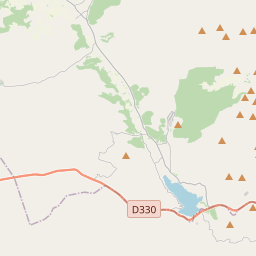
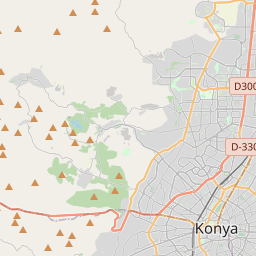
On the map
Last price
—
Floor price
—
7-day median
—
30-day sales
0
30-day range
—
In circulation
0
Price history
median
low – high
sales
No sales in this period
Show table
| Date | median | Low | High | sales |
|---|
Sales history
- Last sale
- —
- 30-day average
- —
- 30-day low
- —
- 30-day high
- —
- Sales 7d
- 0
- Sales 30d
- 0
No sales yet.
Anonymous sales: no buyer or seller shown. Figures count player-to-player sales only.
From Wikipedia
Sille, also known as Sille Subaşı and historically Sylata, is a neighbourhood of the municipality and district of Selçuklu, Konya Province, Turkey. Its population is 1,191 (2022). Sille Subaşı was one of the few villages where the Cappadocian Greek language was spoken until 1922. It was inhabited by Greeks who had been living there in peaceful coexistence with the nearby Turks of Konya for over 800 years. The reason for this peaceful coexistence was Jalal al-Din Muhammad Rumi, who was the witness of a miracle that happened at the nearby Orthodox Christian monastery of Saint Chariton. In the nineteenth and twentieth centuries there were three churches and a small mosque within the monastic complex. The Christians of the monastery reported a legend according to which the mosque was built by the Muslims in honor of St. Chariton when he saved Rumi’s son from a death fall in the hills surrounding the monastery. This miracle was celebrated, prior to World War I, by an annual gift of oil from the dervishes to the monastery. The leader of the Mawlawis spent one night each year in prayer at this mosque. In the Turkish language the monastery is now called Akmanastir and is translated as, "White Monastery". Jalal al-Din Rumi constructed a small mosque inside the Saint Chariton monastery. It is also notable that Jalal al-Din Rumi wrote Greek poems using the Arabic-Turkish script, while Greek Sille villagers wrote Turkish using the Greek alphabet scripting. This form of writing spread across the region and was commonly known as Karamanli Turkish writing. Mevlana asked the Turks never to hurt the Greeks of the village, and assigned to the Greek villagers the task of cleaning his own tomb. The Turks respected his commandment. In turbulent times, several firmans from the Sultan were sent to Konya...
Text: Wikipédia, CC BY-SA 4.0. · Image: Dosseman (CC BY-SA 4.0) ·
Related cards

Selimpaşa
Mahalle (administrative quarter) in Silivri, İstanbul–Europe, northwestern Turkey
Nº Q2472581 ★★★★

Konya
Metropolitan municipality in Central Anatolia, Turkey
Nº Q79857 ★★★★

Selçuklu
District of Konya, central Turkey
Nº Q2674097 ★

Silivri
District and town of Istanbul, Turkey
Nº Q732028 ★★

Şile
District of İstanbul, northwestern Turkey
Nº Q241631 ★★

Zile
Town and a district of Tokat Province, Turkey
Nº Q203018 ★