
Symplegades
Mythical rocks in the Bosphorus strait
The Symplegades (; Greek: Συμπληγάδες, Symplēgádes), also known as Clashing Rocks or Cyanean Rocks (Κυανέαι), were, according to Greek mythology, a pair of rocks at the Bosphorus that clashed together whenever a vessel went through. They were defeated by Jason and the Argonauts, who would have been lost and killed by the rocks except for Phineus's advice.
Nº Q326380 ★★★
Rare · Places
Symplegades
Mythical rocks in the Bosphorus strait
The Symplegades (; Greek: Συμπληγάδες, Symplēgádes), also known as Clashing Rocks or Cyanean Rocks (Κυανέαι), were, according to Greek mythology, a pair of rocks at the Bosphorus that clashed together whenever a vessel went through. They were defeated by Jason and the Argonauts, who would have been lost and killed by the rocks except for Phineus's advice.
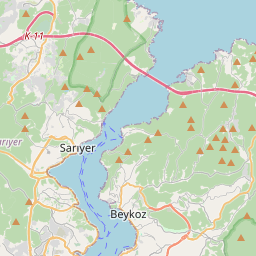
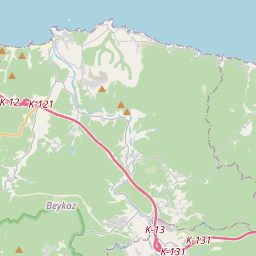
On the map

Last price
—
Floor price
—
7-day median
—
30-day sales
0
30-day range
—
In circulation
0
Price history
median
low – high
sales
No sales in this period
Show table
| Date | median | Low | High | sales |
|---|
Sales history
- Last sale
- —
- 30-day average
- —
- 30-day low
- —
- 30-day high
- —
- Sales 7d
- 0
- Sales 30d
- 0
No sales yet.
Anonymous sales: no buyer or seller shown. Figures count player-to-player sales only.
From Wikipedia
The Symplegades (; Greek: Συμπληγάδες, Symplēgádes), also known as Clashing Rocks or Cyanean Rocks (Κυανέαι), were, according to Greek mythology, a pair of rocks at the Bosphorus that clashed together whenever a vessel went through. They were defeated by Jason and the Argonauts, who would have been lost and killed by the rocks except for Phineus's advice. Jason let a dove fly between the rocks to see exactly how fast they would have to row to beat the rocks; the dove lost only its tail feathers. The Argonauts rowed mightily to get through and lost only part of the stern ornament. After that, the Symplegades stopped moving permanently. The European rock is usually identified with an islet, about 20 metres (66 ft) wide and 200 metres (660 ft) long, which stands about 100 metres (330 ft) off the shore of a village called Rumelifeneri ('Lighthouse of Rumeli'), and is connected to it by a modern concrete jetty. At its highest point, there is an ancient altar known as the Pillar of Pompey, though it has nothing to do with Pompey. Dionysius of Byzantium mentions a Roman shrine to Apollo on one of the Cyanean Rocks, and the 16th-century French traveller Petrus Gyllius thought the altar was a remnant of that shrine. The Asian rock is probably a reef off the Yum Burnu (north of Anadolu Feneri 'Lighthouse of Anatolia'), described by Gyllius: The reef is divided into four rocks above water which, however, are joined below; it is separated from the continent by a narrow channel filled with many stones, by which as by a staircase one can cross the channel with dry feet when the sea is calm; but when the sea is rough, waves surround the four rocks into which I said the reef is divided. Three of...
Text: Wikipédia, CC BY-SA 4.0. · Image: Sinan Şahin (CC BY 3.0) ·
Related cards

History of the Cyclades
Greek islands located in the Aegean Sea
Nº Q3137392 ★★

Hyperboreans
Mythical northern people in Greek mythology
Nº Q11925683 ★★★

Archaeocyatha
Extinct class of sponges
Nº Q510821 ★★★

Ourea
Greek mountain deities
Nº Q1191947 ★★★

Myrrhbearers
Individuals involved in the burial of Jesus
Nº Q2388719 ★★★

Androphagi
Ancient tribe described by Herodotus
Nº Q2986876 ★★★