

Type Allocation Code
Identifier
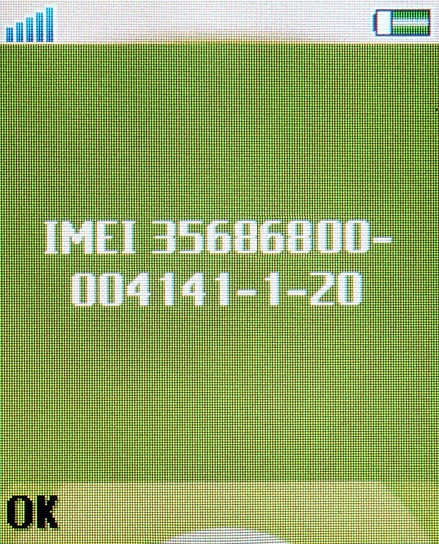
The Type Allocation Code (TAC) is the initial eight-digit portion of the 15-digit IMEI and 16-digit IMEISV codes used to uniquely identify wireless devices. The Type Allocation Code identifies a particular model (and often revision) of wireless telephone for use on a GSM, UMTS, LTE, 5G NR, iDEN, Iridium or other IMEI-employing wireless network.
Nº Q4405342 ★
Common · Knowledge
Type Allocation Code
Identifier
The Type Allocation Code (TAC) is the initial eight-digit portion of the 15-digit IMEI and 16-digit IMEISV codes used to uniquely identify wireless devices. The Type Allocation Code identifies a particular model (and often revision) of wireless telephone for use on a GSM, UMTS, LTE, 5G NR, iDEN, Iridium or other IMEI-employing wireless network.
From Wikipedia
The Type Allocation Code (TAC) is the initial eight-digit portion of the 15-digit IMEI and 16-digit IMEISV codes used to uniquely identify wireless devices. The Type Allocation Code identifies a particular model (and often revision) of wireless telephone for use on a GSM, UMTS, LTE, 5G NR, iDEN, Iridium or other IMEI-employing wireless network. The first two digits of the TAC are the Reporting Body Identifier. This indicates the GSMA-approved group that allocated the TAC. Prior to January 1, 2003, the global standard for the IMEI started with a six-digit Type Approval Code followed by a two-digit Final Assembly Code (FAC). The Type Approval Code (also known as TAC) indicated that the particular device was approved by a national GSM approval body and the FAC identified the company that had built and assembled the device (which is not always the same as the brand name stamped on the device). Effective on that date, many GSM member nations and entities (mainly Europe) moved away from requiring that devices be approved by national bodies, and towards a system where device manufacturers self-regulate the device market. As a result, a manufacturer now simply requests an eight-digit Type Allocation Code for a new phone model from the international GSM standards body, instead of submitting a device for approval to a national review body. Both the old and new TAC uniquely identify a model of phone, although some models may have more than one code, depending on revision, manufacturing location, and other factors.
Text: Wikipédia, CC BY-SA 4.0. · Image: Olaf Baumann (CC BY-SA 3.0) ·
Related cards
-
O
Open Location Code
Encoding of geographic coordinates into a short string of characters and digits, named plus code
Nº Q23582265 ★★
Not listed
-
U
Uniform Type Identifier
String used to identify file types on Apple subsystems
Nº Q2257511 ★
Not listed
-
L
List of UIC country codes
Country code issued by the International Union of Railways
Nº Q597349 ★★★
Not listed
-

ISO/IEC 14443
IEC standard
Nº Q787190 ★★
Not listed
-

Chinese telegraph code
Four-digit decimal character encoding for electrically telegraphing messages written with Chinese characters
Nº Q5100952 ★
Not listed
-

WiMAX
Wireless broadband standard
Nº Q133973 ★★★
Not listed
-
M
Market Identifier Code
4-alphanumerics identifier of financial markets, standardized by ISO 10383. Also standardizes market categories
Nº Q6770697 ★
Not listed
-

IATA airport code
Three-letter air-travel designation for airports, railway stations and cities
Nº Q192824 ★★★★
Not listed
-

TE Connectivity
Swiss-domiciled technology company
Nº Q663452 ★★★
Not listed
-
I
IEEE 802.11b-1999
Amendment to the 802.11 IEEE standard
Nº Q2747387 ★
Not listed
-

LTE (telecommunication)
Wireless communication standards
Nº Q79703 ★★★
Not listed
-
C
Call to action (marketing)
Marketing term for any device designed to prompt an immediate response or encourage an immediate sale
Nº Q5021685 ★★
Not listed
-
s
special rate telephone number
Telephone number with a rate higher or lower than usual
Nº Q65515908 ★
Not listed
-

MIFARE
NXP Semiconductors-owned trademark of a series of chips widely used in contactless smart cards and proximity cards
Nº Q1405976 ★★★
Not listed
-

G.711
ITU-T recommendation
Nº Q952898 ★
Not listed
-
B
Beta Code
ASCII representation format for ancient Greek
Nº Q752325 ★
Not listed
-

ط
Arabic letter tah (U+0637) or ṭā’
Nº Q221965 ★
Not listed
-
I
International Securities Identification Number
Identifier for a security
Nº Q259605 ★★★
Not listed