

Type Allocation Code
Identifier
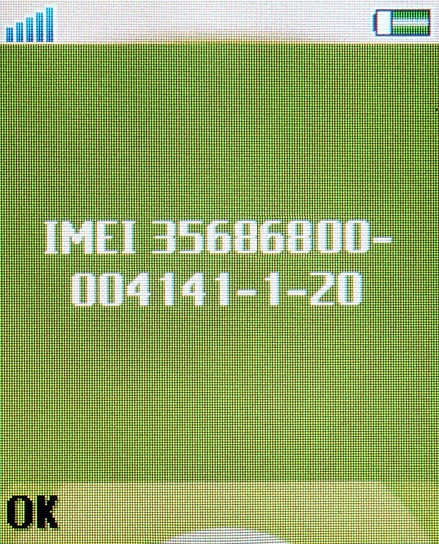
The Type Allocation Code (TAC) is the initial eight-digit portion of the 15-digit IMEI and 16-digit IMEISV codes used to uniquely identify wireless devices. The Type Allocation Code identifies a particular model (and often revision) of wireless telephone for use on a GSM, UMTS, LTE, 5G NR, iDEN, Iridium or other IMEI-employing wireless network.
Nº Q4405342 ★
Common · Knowledge
Type Allocation Code
Identifier
The Type Allocation Code (TAC) is the initial eight-digit portion of the 15-digit IMEI and 16-digit IMEISV codes used to uniquely identify wireless devices. The Type Allocation Code identifies a particular model (and often revision) of wireless telephone for use on a GSM, UMTS, LTE, 5G NR, iDEN, Iridium or other IMEI-employing wireless network.
From Wikipedia
The Type Allocation Code (TAC) is the initial eight-digit portion of the 15-digit IMEI and 16-digit IMEISV codes used to uniquely identify wireless devices. The Type Allocation Code identifies a particular model (and often revision) of wireless telephone for use on a GSM, UMTS, LTE, 5G NR, iDEN, Iridium or other IMEI-employing wireless network. The first two digits of the TAC are the Reporting Body Identifier. This indicates the GSMA-approved group that allocated the TAC. Prior to January 1, 2003, the global standard for the IMEI started with a six-digit Type Approval Code followed by a two-digit Final Assembly Code (FAC). The Type Approval Code (also known as TAC) indicated that the particular device was approved by a national GSM approval body and the FAC identified the company that had built and assembled the device (which is not always the same as the brand name stamped on the device). Effective on that date, many GSM member nations and entities (mainly Europe) moved away from requiring that devices be approved by national bodies, and towards a system where device manufacturers self-regulate the device market. As a result, a manufacturer now simply requests an eight-digit Type Allocation Code for a new phone model from the international GSM standards body, instead of submitting a device for approval to a national review body. Both the old and new TAC uniquely identify a model of phone, although some models may have more than one code, depending on revision, manufacturing location, and other factors.
Text: Wikipédia, CC BY-SA 4.0. · Image: Olaf Baumann (CC BY-SA 3.0) ·
Related cards
-
A
ATC code N
Section of Anatomical Therapeutic Chemical Classification System relating to drugs affecting the nervous system
Nº Q375737 ★
-
T
TAK
Lossless audio coding format
Nº Q1153141 ★
-
N
Narrowband IoT
Radio technology standard
Nº Q25021569 ★★
-
B
Base 36
Positional numeral system using 36 as the radix
Nº Q3894487 ★★
-
I
ITU prefix
Wikimedia list article
Nº Q1344924 ★★★
-
A
ATC code S
Section of Anatomical Therapeutic Chemical Classification System relating to drugs affecting the sensory organs
Nº Q434332 ★
-

Hamming(7,4)
Linear error-correcting code
Nº Q2322550 ★
-

Telephone numbers in Mexico
Nº Q7696616 ★★★★
-

Constant bitrate
Term describing a multimedia stream or file that contains a constant amount of information per unit time
Nº Q1325924 ★★
-

EBCDIC
Computer character encoding
Nº Q627945 ★★
-
I
ISO/IEC 42010
International standard
Nº Q5974096 ★★
-

Modified frequency modulation
Encoding in communication technology
Nº Q1942166 ★★
-

Type–length–value
Data format used in communication protocols
Nº Q1544297 ★
-
P
Pulse-code modulation
Digital representation of sampled analog signals
Nº Q13043846 ★★★
-

74181
7400 Series TTL Arithmetic Logic Unit IC
Nº Q4643313 ★
-

Byte
Unit of digital information equal to 8 bits
Nº Q8799 ★★★★
-

LTE Advanced
Mobile communication standard and major enhancement of the Long Term Evolution (LTE) standard
Nº Q1345402 ★★
-
E
E.214
ITU-T recommendation
Nº Q2813207 ★