
Yang Pass
Western Han dynasty pass and watch tower near Dunhuang, Gansu province, China
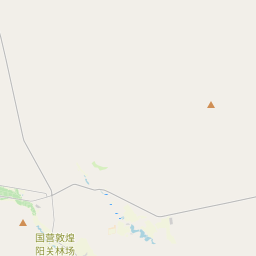
Yangguan, or Yangguan Pass (traditional Chinese: 陽關; simplified Chinese: 阳关; lit. 'Sun Gate'), is a mountain pass that was fortified by Emperor Wu of the Western Han dynasty around 120 BC and used as an outpost in the colonial dominions adjacent to ancient China. It is located approximately 70 kilometres (43 mi) southwest of Dunhuang, in the Gansu territory to the west of the Shaanxi province in the far Northwest China, which was in ancient times the westernmost administrative center of China.
Nº Q909541 ★
Common · Places
Yang Pass
Western Han dynasty pass and watch tower near Dunhuang, Gansu province, China
Yangguan, or Yangguan Pass (traditional Chinese: 陽關; simplified Chinese: 阳关; lit. 'Sun Gate'), is a mountain pass that was fortified by Emperor Wu of the Western Han dynasty around 120 BC and used as an outpost in the colonial dominions adjacent to ancient China. It is located approximately 70 kilometres (43 mi) southwest of Dunhuang, in the Gansu territory to the west of the Shaanxi province in the far Northwest China, which was in ancient times the westernmost administrative center of China.
On the map



Last price
—
Floor price
—
7-day median
—
30-day sales
0
30-day range
—
In circulation
0
Price history
median
low – high
sales
No sales in this period
Show table
| Date | median | Low | High | sales |
|---|
Sales history
- Last sale
- —
- 30-day average
- —
- 30-day low
- —
- 30-day high
- —
- Sales 7d
- 0
- Sales 30d
- 0
No sales yet.
Anonymous sales: no buyer or seller shown. Figures count player-to-player sales only.
From Wikipedia
Yangguan, or Yangguan Pass (traditional Chinese: 陽關; simplified Chinese: 阳关; lit. 'Sun Gate'), is a mountain pass that was fortified by Emperor Wu of the Western Han dynasty around 120 BC and used as an outpost in the colonial dominions adjacent to ancient China. It is located approximately 70 kilometres (43 mi) southwest of Dunhuang, in the Gansu territory to the west of the Shaanxi province in the far Northwest China, which was in ancient times the westernmost administrative center of China. It was established as a frontier defense post, as well as a developed place in China's remote western frontier; Emperor Wu encouraged Chinese to settle there. Today Yangguan is located in Nanhu Village, along the Hexi Corridor. Yangguan was one of China's two most important western passes, the other being Yumenguan. In Chinese, yang means "sun" or "sunny", but it can also be used to mean "south" (the sunny side of a hill being the southern side). Yangguan was therefore so-named because it lies to the south of the Yumenguan Pass. It was an important landmark on the Silk Road. The fortress at Yangguan however had fallen into ruin by around AD 900.
Text: Wikipédia, CC BY-SA 4.0. · Image: 张骐 (CC BY-SA 3.0) ·
Related cards
-

Tong Pass
Historically important mountain pass in northwest China
Nº Q6757995 ★★
Not listed
-
W
Wu Pass
Mountain pass in Shaanxi, China
Nº Q3431367 ★★
Not listed
-

Hangu Pass
Mountain pass in China
Nº Q848793 ★★★★
Not listed
-
D
Dasan Pass
Mountain pass in Shaanxi, China
Nº Q25112772 ★★★
Not listed
-

Yanmen Pass
Mountain pass in China which includes three fortified gatehouses along the Great Wall
Nº Q1275915 ★
Not listed
-

Mei Pass
Mountain pass in Guangdong, People's Republic of China
Nº Q4739183 ★★★
Not listed