

Common · Places
Yongding River
River in the People's Republic of China
The Yongding River (Chinese: 永定河; pinyin: Yǒngdìng Hé; Wade–Giles: Yungting Ho) is a river in northern China. It is one of the main tributaries in the Hai River system and is the largest river to flow through Beijing. In recent years, the Beijing segment of the river has dried up due to environmental issues.
Read more
The Beijing municipal government has invested 16 billion yuan in an effort to replace the riverbed with parkland or smaller bodies of water. The river was originally called Wuding River (Chinese: 無定河; pinyin: Wúdìng Hé), literally "unfixed river", because its flow was irregular. When the Kangxi Emperor reigned, he enacted various hydraulic engineering projects in the region to rein in the seasonal flooding. After those projects, the river was renamed to its modern name, which means "ever-fixed river". The Yongding River is 650 kilometers (400 mi) in length and drains an area of 47,016 square kilometers (18,153 sq mi). It emerges from the Guancen Mountains (管涔山) in Ningwu County, Shanxi Province, where it is known as the Sanggan River (桑干河) and flows northeast into Inner Mongolia and then heads southeast into Hebei Province. In Huailai County, it fills the Guanting Reservoir, the biggest reservoir serving Beijing, and takes on the name Yongding.
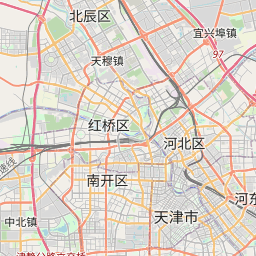
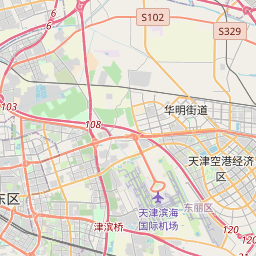
On the map
Text: Wikipédia, CC BY-SA 4.0. · Image: User:Vmenkov (CC BY-SA 3.0) ·