
York, Upper Canada
Human settlement in Upper Canada
York was a town and the second capital of the colony of Upper Canada. It is the predecessor to the old city of Toronto (1834–1998).
Nº Q2600811 ★
Common · Places
York, Upper Canada
Human settlement in Upper Canada
York was a town and the second capital of the colony of Upper Canada. It is the predecessor to the old city of Toronto (1834–1998).
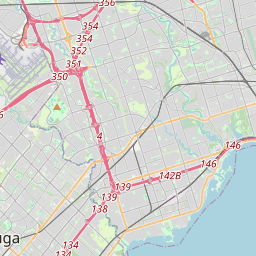
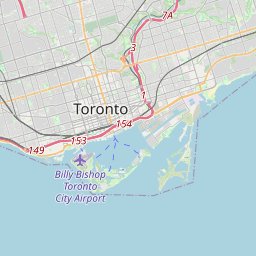
On the map
Last price
—
Floor price
—
7-day median
—
30-day sales
0
30-day range
—
In circulation
0
Price history
median
low – high
sales
No sales in this period
Show table
| Date | median | Low | High | sales |
|---|
Sales history
- Last sale
- —
- 30-day average
- —
- 30-day low
- —
- 30-day high
- —
- Sales 7d
- 0
- Sales 30d
- 0
No sales yet.
Anonymous sales: no buyer or seller shown. Figures count player-to-player sales only.
From Wikipedia
York was a town and the second capital of the colony of Upper Canada. It is the predecessor to the old city of Toronto (1834–1998). It was established in 1793 by Lieutenant-Governor John Graves Simcoe as a "temporary" location for the capital of Upper Canada, while he made plans to build a capital near today's London, Ontario. Simcoe renamed the location York after Prince Frederick, Duke of York and Albany, George III's second son. Simcoe gave up his plan to build a capital at London, and York became the permanent capital of Upper Canada on February 1, 1796. That year Simcoe returned to Britain and was temporarily replaced by Peter Russell. The original townsite was a compact ten blocks near the mouth of the Don River and a garrison was built at the channel to Toronto Harbour. Government buildings and a law court were established. Yonge Street was built, connecting York to the Holland River to the north. To the east, Kingston Road was built to the mouth of the Trent River. In 1797, the town site was expanded to the west to allow for public buildings and expansion. One of the new area's public functions, a public market, was started in 1803. It continues today as St. Lawrence Market. The settlement was attacked by American troops during the War of 1812. As the British garrison retreated, they detonated their powder magazine, inflicting numerous casualties on the invading U.S. forces, who proceeded to loot and destroy the town. The victorious Americans chose not to occupy the town and the British eventually returned without conflict. A reprisal attack was made on the American capital of Washington, D.C. a year later. After the war was over, the town continued to grow, expanding to the west, leaving the original town site, a less...
Text: Wikipédia, CC BY-SA 4.0. · Image: Telegram staff (Public domain) ·
Related cards

History of Toronto
History of the city of Toronto, Ontario, Canada
Nº Q5866885 ★

John Graves Simcoe
British army officer and the first Lieutenant Governor of Upper Canada (1752-1806)
Nº Q561352 ★★★

York, Ontario
Former municipality in Ontario, Canada
Nº Q520484 ★

Halifax
Settlement, former incorporated city in Nova Scotia, Canada
Nº Q3246744 ★

Amalgamation of Toronto
Creation of the current political borders of Toronto, Ontario
Nº Q4739382 ★

Canandaigua, New York
City in Ontario County, New York, United States
Nº Q1363104 ★★