

Común · Lugares
Large Helical Device
Fusion reactor in Japan
The Large Helical Device (大型ヘリカル装置, Ōgata Herikaru Sōchi) (LHD) was a fusion research device located in Toki, Gifu, Japan. It was operated by the National Institute for Fusion Science (NIFS) until 2025. The LHD employed the heliotron magnetic field configuration originally developed in Japan.
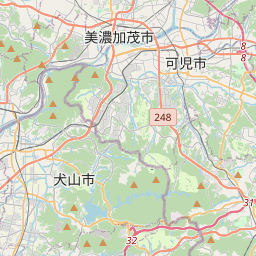
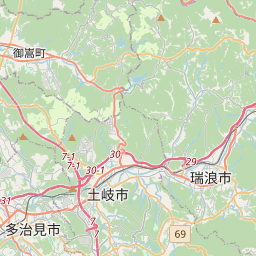
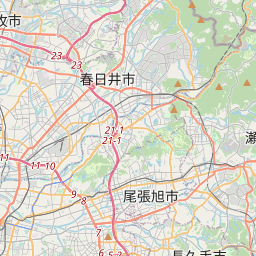
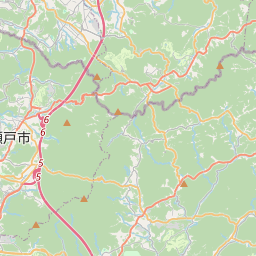
En el mapa
En Wikipedia
Texto en inglés Aún no hay artículo en tu idioma: extracto en inglés.
The Large Helical Device (大型ヘリカル装置, Ōgata Herikaru Sōchi) (LHD) was a fusion research device located in Toki, Gifu, Japan. It was operated by the National Institute for Fusion Science (NIFS) until 2025. The LHD employed the heliotron magnetic field configuration originally developed in Japan. It was the world's largest and most powerful superconducting stellarator. In 2015, Wendelstein 7-X began operation with equal plasma volume but a weaker magnetic field. Until that time, LHD was also the largest superconducting magnetic confinement fusion device of any kind, including tokamaks. The objective of the project was to conduct fusion plasma confinement research in a steady state in order to elucidate possible solutions to physics and engineering problems in helical plasma reactors. The LHD used neutral beam injection, ion cyclotron radio frequency (ICRF), and electron cyclotron resonance heating (ECRH) to heat the plasma, much like tokamaks. The helical divertor heat and particle exhaust system used the large helical coils to produce a diverting field. This configuration allows for the modification of the stochastic layer size, which is positioned between the confined plasma volume and the field lines that terminate on the divertor plate. Boundary plasma research at LHD focused on the capability of the helical divertor as an exhaust system for heliotrons and stellarators. LHD achieved the longest sustained runs of any magnetic fusion experiment, stellarator or tokamak, at 48 minutes with 1.2x10¹⁹m-3 plasma density and 2 keV plasma temperature, and 54 minutes with 0.4x10¹⁹m-3 plasma density and 1 keV plasma temperature. Research into the heliotron stellarator type with the aim of generating energy from fusion continues in Japan with the company Helical Fusion, founded by NIFS scientists. The company was conditionally selected for support from the Japanese government for its fusion projects in 2026.
Texto: Wikipedia en inglés, CC BY-SA 4.0. · Imagen: Justin Ruckman from Charlotte, NC, USA (CC BY 2.0) ·


